Quick Answer: Collision repair addresses damage caused by an accident or impact, while auto body restoration addresses rust, aging paint, worn body panels, and condition problems that develop over time. If a vehicle has both recent damage and existing deterioration, the repair plan may need to address both issues rather than only the visible damage.
At Revive Auto Center, the first question is usually what caused the problem. That helps separate collision work from restoration, paint repair, or dent repair and gives the owner a clearer starting point for an estimate.
The Short Answer: The Difference Comes Down to Why the Work Is Needed
Auto body restoration vs. collision repair is mainly a question of cause and repair goal. Collision repair begins with an impact event. Restoration begins with a vehicle condition problem such as corrosion, damaged paint, prior bodywork, or age-related deterioration.
- Collision repair focuses on damage from a crash, parking-lot impact, curb contact, road debris, or another contact event.
- Auto body restoration focuses on renewing the vehicle’s condition, appearance, and body panels over time.
- Both services can involve metal repair, panel work, bodywork, paint matching, and refinishing.
- Some vehicles need both when an accident affects an area with rust, failing paint, or previous repairs.
The service name matters less than the actual repair scope. A damaged fender after an accident generally needs a collision-focused inspection. A fender with bubbling paint and corrosion generally needs restoration-focused work. When both conditions exist, treating only the newest problem can leave the older one in place.
What Is Collision Repair?
Collision Repair Is Typically Needed After Impact Damage
Collision repair addresses damage caused by an impact. This includes damage from a vehicle accident, door contact in a parking lot, a parking barrier, road debris, or contact with an object.
A visible dent or cracked bumper is not always the full issue. Depending on the impact, an inspection may include body panels, bumper components, trim, paint, panel alignment, and vehicle systems affected by the impact. Problems can arise when a repair is judged only by what is visible from the outside.
For accident-related damage, collision repair services focus on identifying the affected area and building a repair plan around the impact itself.
Common Reasons to Schedule Collision Repair
Collision repair is usually the right starting point when the issue followed a specific event. Common signs include:
- A damaged bumper, fender, door, hood, trunk, quarter panel, or side panel
- Dents, cracks, scratches, damaged trim, or broken paint after contact
- Panel gaps that no longer look even
- Doors, hoods, trunks, or liftgates that no longer open and close normally
- A change in alignment, handling, or vehicle operation after a meaningful impact
If a panel shifted after an accident, the repair may require more than a cosmetic touch-up. The vehicle should be inspected for how the damaged area fits and functions, not only whether the paint can be covered.
What a Collision Repair Inspection May Include
A collision inspection starts with visible damage but may extend beyond it. The repair process can include:
- Inspection of damaged panels, bumpers, trim, glass, and paint
- Panel fitment and alignment checks
- Review of damage that becomes clearer after disassembly
- Review of structural areas, suspension components, safety equipment, sensors, or electronics when the impact makes those areas relevant
- Paint matching and refinishing for repaired or replaced areas
Additional damage can become more apparent once damaged components are removed or closely inspected. That is why an initial estimate may need to change as impact-related damage is identified. A repair plan should account for damage found during the process rather than leaving affected areas unaddressed.
What Is Auto Body Restoration?
Restoration Focuses on Vehicle Condition, Preservation, and Renewal
Auto body restoration is work intended to renew or preserve a vehicle’s body condition, finish, and appearance. It is not limited to classic cars. An older daily driver with fading paint, rust around a panel, or failing previous bodywork can also need restoration work.
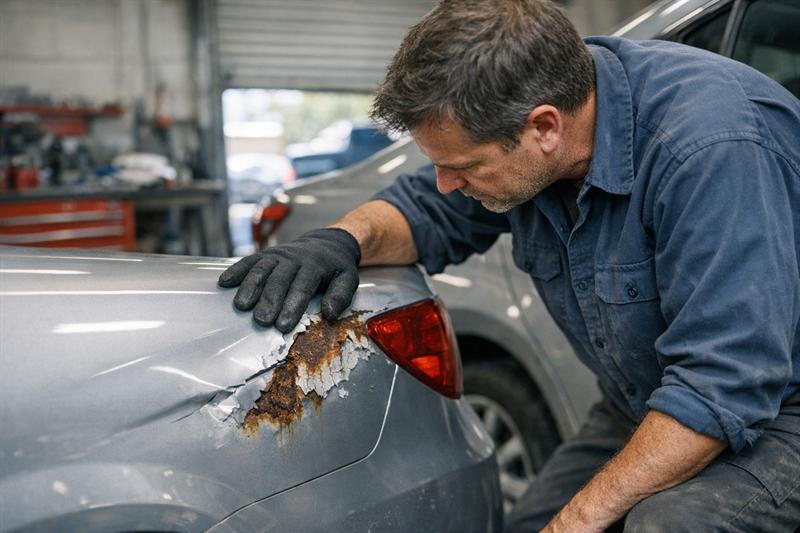
Restoration is different from a quick cosmetic cover-up. When corrosion is present beneath the paint or a panel is deteriorating, paint alone typically does not address the underlying condition. The cause of the finish failure generally needs attention before refinishing is completed.
For condition-based bodywork and finish renewal, auto body restoration services are an appropriate starting point.
Common Reasons to Choose Auto Body Restoration
Restoration is generally the better fit when a vehicle’s condition has declined gradually rather than after one recent impact. Common reasons include:
- Rust, corrosion, bubbling paint, or deteriorating panels
- Faded, peeling, cracked, or heavily weathered paint
- Older repairs that no longer match or no longer meet the owner’s goals
- Body condition concerns on an older daily driver
- Preservation of a classic, collectible, or enthusiast vehicle
- A planned vehicle refresh before long-term ownership or resale
Rust and failing paint can worsen when left exposed. Moisture and corrosion may continue beneath the finish, leading to a larger repair area and more preparation work later. Addressing the affected area earlier can help define the condition before surrounding material deteriorates further.
What Auto Body Restoration Can Involve
Restoration work is based on the vehicle’s condition and the owner’s intended result. Depending on the project, it can include:
- Rust evaluation and corrosion repair
- Metal repair, bodywork, or panel replacement when needed
- Surface preparation before refinishing
- Paint correction, partial refinishing, or complete repainting
- Repair planning based on preservation, appearance, longevity, and budget priorities
A vehicle can appear to need paint work while having a deeper body condition issue underneath. Bubbling paint, a cracked finish, and visible rust are not always only appearance concerns when corrosion has progressed below the surface. The repair plan should account for the condition underneath before new paint is applied.
Auto Body Restoration vs. Collision Repair at a Glance
- Primary cause: Collision repair addresses impact damage. Restoration addresses aging, corrosion, worn finishes, and broader condition concerns.
- Main objective: Collision repair focuses on accident-related areas. Restoration focuses on renewing, preserving, or improving body and finish condition.
- Inspection focus: Collision work looks at the effects of an impact. Restoration looks at the extent of deterioration and the condition of affected panels.
- Typical work: Both can involve panel repair, bodywork, refinishing, and paint matching.
- Payment path: Collision repairs may involve insurance when a qualifying claim is involved. Restoration for aging paint, rust, and planned renewal is commonly owner-directed.
In practical terms, an accident generally creates a collision repair issue, while deterioration generally creates a restoration issue. When a recent accident damages a panel that was already rusting or failing, the repair scope should separate the new impact damage from the existing condition problem.
When Collision Repair and Restoration Overlap
A Collision Can Reveal Pre-Existing Body Condition Issues
A collision can expose older problems near the damaged area. Rust under a wheel arch, faded paint on an adjacent panel, or a previous repair that no longer matches may become more apparent once nearby impact damage is inspected.
This is where repair conversations can become confusing. New impact damage and an older condition issue are not automatically the same repair problem, but both can affect how the finished work is planned. A detailed estimate should distinguish accident-related damage from pre-existing deterioration when possible.
Restoration May Include Collision-Style Body Repair Work
Restoration projects can require the same types of work used in collision repair, including panel repair, metalwork, alignment, bodywork, and refinishing. The difference is that restoration begins with a condition problem or a planned renewal goal, not a recent impact.
Restoration does not always mean a complete classic-car rebuild. It can be as focused as repairing corrosion in one area and refinishing that panel, or as broad as renewing multiple panels with failing paint and prior bodywork.
How to Tell Which Service Your Vehicle May Need
Start with the cause of the problem. These signs can help identify the most likely service direction:
- A recent accident or impact: Start with collision repair.
- A single dent with intact paint: Paintless dent repair may be an option if the dent shape, depth, location, and panel access support it.
- Rust, bubbling paint, corrosion, or peeling finish: Start with restoration because the condition beneath the surface may need attention.
- Misaligned panels or doors that no longer close properly after impact: Treat this as collision-related damage that needs an inspection.
- Widespread fading, weathering, or failing old repairs: Restoration is usually the more practical path.
- Recent impact damage plus existing rust or failing paint: Expect a combined collision and restoration discussion.
If the damage happened suddenly, collision repair is usually the right starting point. If the problem developed over time, restoration is usually the right starting point. This checklist helps identify the service category, but an in-person inspection is needed to determine panel condition and repair scope.
Where Paint Services and Paintless Dent Repair Fit In
Paint Services Can Support Either Repair Path
Paint services can be part of collision repair or restoration. After an accident, paint work may be needed to refinish a repaired or replaced panel. During restoration, paint work can address failing clear coat, oxidation, fading, peeling, or finish inconsistency after the underlying body condition has been addressed.
Paint matching matters because repaired panels should blend with surrounding areas as closely as practical. The amount of paint work depends on the repair area, panel condition, color, finish, and whether nearby panels need blending.
When Paintless Dent Repair May Be an Option
Paintless dent repair is a targeted option for certain dents when the paint is intact and the metal can be accessed and worked without conventional bodywork and refinishing. It is not a replacement for all dent repairs or collision repairs.
- PDR may be a fit when: the paint is intact, the dent is accessible, and the metal is not sharply creased or severely stretched.
- PDR is usually not the right fit when: paint is cracked, the panel has rust, the dent has a sharp crease, or the impact caused broader panel damage.
Not every small dent is a paintless dent repair job. Once paint has broken or corrosion is involved, conventional bodywork and paint may be needed rather than a dent-only solution.
What to Expect From an Estimate
An accurate estimate starts with the vehicle’s actual condition, not only a photo of the most visible damage. The process generally includes:
- Inspecting visible damage and the overall body condition
- Discussing whether the problem came from a recent impact or gradual deterioration
- Identifying whether the project is collision repair, restoration, paint work, paintless dent repair, or a combination
- Reviewing parts, panel repair, corrosion concerns, preparation, paint, and refinishing needs
- Explaining that closer inspection or disassembly can reveal additional damage or deterioration
- Discussing insurance involvement when it applies to collision-related work
An estimate should explain what is known, what still needs closer inspection, and what conditions could change the repair scope. That conversation helps avoid confusion when visible damage proves to be only part of the work.
Choosing a Shop When You Need Clarity on Repair Scope
A repair shop should help you understand what is being repaired and why. Before approving work, ask clear questions about the repair plan:
- What damage is visible, and what needs further inspection?
- Is this primarily collision repair, restoration, or a combined project?
- What does the estimate include?
- What could change the scope after the repair begins?
- How will accident-related insurance communication be handled if a claim is involved?
- How do pre-existing rust, paint failure, or older repairs affect the plan?
Revive Auto Center focuses this conversation on the vehicle’s condition and the owner’s repair priorities rather than forcing every exterior issue into one category. That approach is especially useful when a vehicle has both impact damage and older body concerns, because the repair plan should explain both instead of overlooking one issue.
Key Takeaways
- Collision repair generally addresses damage caused by an accident or impact.
- Auto body restoration generally addresses rust, aging paint, deterioration, and broader renewal goals.
- Both services can include bodywork, panel repair, and refinishing.
- Impact damage and existing body condition issues can overlap in the same repair project.
- An inspection is the most reliable way to determine the repair scope.
Conclusion
The real issue is not simply choosing between “restoration” and “collision repair.” It is identifying what caused the damage and whether the visible issue is part of a larger condition problem. Impact-related alignment concerns, rust beneath paint, and failing previous repairs may all affect the repair scope.
Revive Auto Center is a practical next step when you need a clear explanation of whether your vehicle needs collision repair, restoration, paint work, or a combined plan. If you are dealing with recent accident damage, corrosion, failing paint, or a panel that no longer fits correctly, request a free estimate and start with the vehicle’s condition rather than guessing at the service name.
FAQ
Is auto body restoration the same as collision repair?
No. Collision repair addresses damage caused by an accident, impact, or contact event. Auto body restoration focuses on renewing the body, paint, and condition of a vehicle affected by corrosion, fading, peeling paint, worn panels, or older cosmetic work.
Both services can involve bodywork and refinishing. The key difference is what started the project. A dented fender after a parking-lot impact is collision work, while rust spreading under paint on that fender is restoration work. When both are present, the repair plan may need to address both conditions.
Do I need collision repair if my car still drives normally?
A vehicle can still drive normally after an impact while the affected body area needs further inspection. Collision repair is not limited to whether the engine starts or the vehicle moves. It can also include damaged panels, bumpers, trim, paint, fitment, and other areas connected to the impact.
For example, a bumper can look lightly damaged while a nearby panel no longer aligns properly. The important question is what was struck and what changed afterward, including panel gaps, door operation, or visible alignment.
Is rust repair considered auto body restoration?
Yes, rust repair is commonly part of auto body restoration because it addresses deterioration that develops over time. Rust can affect more than appearance when it progresses beneath paint or into the panel itself.
Bubbling paint is a common warning sign. It can look like a paint-only issue, but it may point to corrosion below the finish. In that situation, repainting without addressing the damaged material can leave the underlying problem in place.
Can a collision repair shop also restore an older vehicle?
Yes. Collision repair and restoration can use many of the same skills, including panel repair, metalwork, bodywork, alignment, and refinishing. Restoration differs because the work is planned around the vehicle’s condition and the owner’s goal for renewal or preservation rather than a recent accident.
An older vehicle with weathered paint and corrosion may need restoration work even if it has never been in a collision. The condition of the panels, prior repairs, finish failure, and the owner’s desired result determine the scope.
Will insurance cover auto body restoration?
Insurance coverage depends on the policy, the cause of damage, the claim details, and the insurer’s determination. Accident-related collision repairs can involve a qualifying claim, while restoration for rust, wear, fading, and aging paint is commonly owner-directed.
The distinction becomes important when a recent impact affects an area with existing corrosion or paint failure. The estimate should separate accident-related repair needs from pre-existing restoration concerns when possible.
Can paintless dent repair replace collision repair?
Paintless dent repair can repair certain dents when the paint remains intact and the dent’s shape, depth, location, and panel access support the process. It is a targeted repair method, not a substitute for every collision repair.
Cracked paint, sharp creases, stretched metal, rusted panels, and broader impact damage often require conventional body repair and refinishing. The condition of the paint and metal determines whether PDR is the right approach.