Most drivers start looking for tire service after the car begins feeling different. The steering wheel shakes on the freeway, the vehicle drifts to one side, or one tire looks worn long before the others. At Revive Auto Center, that is where a lot of confusion starts, because several different problems can feel almost the same behind the wheel.
That is why tire service in Phoenix should not be treated like one generic item. Rotation, balancing, alignment, and wear inspection each address a different issue, and choosing the wrong one first can leave the real problem unresolved.
What tire service in Phoenix actually includes
Tire service is a group of related services, not one single fix. Some are routine maintenance. Some correct a problem that is already showing up. Some help identify the cause before more parts wear down.
Tire rotation
Tire rotation moves the tires to different positions so they wear more evenly over time. It is meant to manage normal wear and help extend tire life.
What it does not do is correct the reason a tire is wearing unevenly. If one edge is wearing down fast or the vehicle is pulling, rotation only changes where that problem shows up next. In many cases, the tires get rotated, the symptom seems better for a short time, and the same wear pattern starts developing again.
Wheel balancing
Balancing corrects uneven weight distribution in the tire and wheel assembly. When a tire is out of balance, vibration is a common result, especially at higher speeds.
Balancing does not correct alignment angles or worn suspension parts. A vehicle that feels normal on city streets but starts shaking once speed builds often points to balance first, but if the vibration remains after balancing, the cause may be elsewhere.
Wheel alignment
Alignment adjusts how the wheels are positioned so the vehicle tracks properly and the tires meet the road evenly. When alignment is off, the car may drift, the steering wheel may sit off-center, and one section of tread may wear much faster than the rest.
Alignment is one of the first things drivers think about, and often for good reason. But it is also one of the most commonly assumed fixes. If the vehicle has a damaged wheel, worn front-end parts, or suspension wear, alignment alone may not solve the problem. That is where a broader auto repair inspection matters.
Tire wear inspection
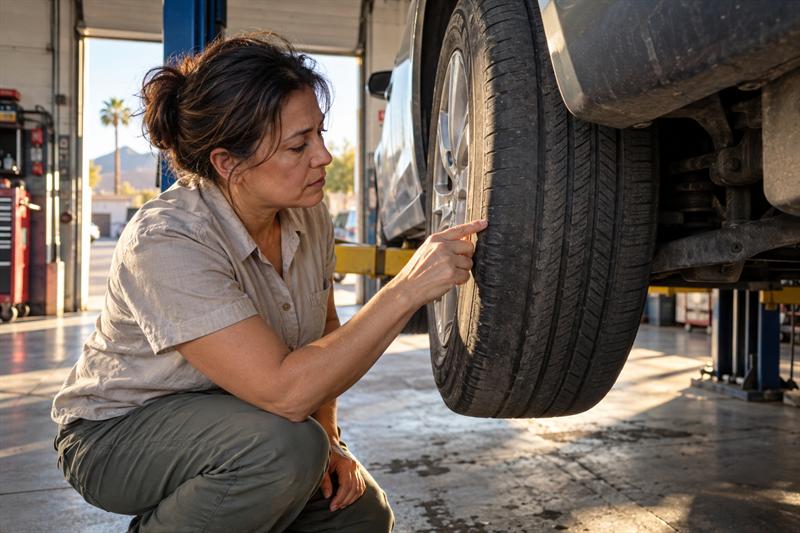
A wear inspection looks at what the tires are already showing. Tread depth, edge wear, center wear, feathering, cupping, pressure condition, and side-to-side differences all help narrow down the cause.
This is one of the most useful steps before replacing tires. A common mistake is putting on a new set without finding out why the last set wore out early. That can lead to the same wear pattern showing up again.
Signs your vehicle may need tire service
Most tire-related problems start with a change in how the vehicle feels or how the tread looks. The challenge is that one symptom can point to more than one cause.
Uneven tread wear
If one tire is wearing faster than the others, or one edge is clearly wearing harder than the rest, the wear pattern is no longer normal. Tires are expected to wear gradually over time, so isolated wear usually points to an underlying issue.
That issue often comes back to alignment, inflation, suspension movement, or a combination of those factors. The pattern matters more than the word “uneven,” because the pattern helps narrow the cause.
Pulling to one side
A vehicle that consistently drifts left or right is often not rolling evenly. Alignment is a common reason, but it is not the only one. Tire pressure differences, uneven tread, and worn steering or suspension parts can create the same complaint.
If the pull is steady and repeatable, it is worth addressing. It often gets worse when the underlying cause is left alone, because the tire keeps wearing in the same pattern.
Steering wheel vibration
When the steering wheel shakes, balance is often the first thing to check. That is a practical starting point, especially when the vibration builds with speed.
But vibration does not come from one source alone. It can also show up with bent wheels, damaged tires, brake issues, or suspension problems under load. If your vehicle has other ride-quality changes, the issue may go beyond the tires, similar to what is covered in this article on Tesla suspension symptoms and inspection.
Noise, roughness, or reduced ride comfort
A rough ride or repetitive road noise usually means the tire is no longer meeting the road cleanly. That can come from uneven wear, inflation issues, or movement in the suspension that changes how the tire contacts the pavement.
What often happens is that the symptom gets ignored until it becomes much more noticeable. By that point, the wear pattern is usually more advanced and the fix may involve more than routine maintenance.
What different tire wear patterns can mean
Wear patterns are one of the clearest clues on the vehicle. They do not replace inspection, but they often point the process in the right direction.
Inside-edge wear
Inside-edge wear is often associated with alignment-related angle problems. When the inner edge disappears faster than the rest of the tread, the tire is spending too much time loaded in the wrong position.
This type of wear can shorten tire life quickly because it is easy to miss until the damage is advanced. Once the inside edge is badly worn, the tire is usually well beyond a normal wear pattern.
Outside-edge wear
Outside-edge wear also suggests the tire is not contacting the road evenly. In some cases, that points back to alignment. In others, driving pattern and corner-loading can affect how the tread wears.
The key is comparing that tire to the others. If one outside edge looks noticeably worse than the rest of the vehicle, that usually is not routine wear. It is a pattern that needs an explanation.
Center wear
Center wear is often associated with inflation-related problems. When the middle of the tread is doing more of the work than the shoulders, the contact patch is not staying even.
In Phoenix, this can get overlooked because tire pressure seems like a minor maintenance item. It is not. Pressure problems can affect tread wear, handling, and ride quality at the same time.
Cupping or scalloping
Cupping or scalloping often means the tire is not staying planted consistently on the road. This is where many basic tire pages stop too early, because the answer is often not just tire replacement.
This pattern is often associated with issues beyond the tire itself, including balance or suspension concerns. It can develop when a vehicle has been driven with ride-quality changes for too long. The tire starts reflecting that movement, and the roughness often becomes more noticeable over time.
Feathering
Feathering creates a tread pattern that feels smooth in one direction and sharp in the other when you run a hand across it. That texture is often associated with alignment-related tracking issues, especially toe-related wear.
This pattern usually develops gradually, which is why drivers miss it early. By the time the tire starts making more noise or the vehicle feels unsettled, the wear has often been building for a while.
Why Phoenix driving can be hard on tires
Phoenix driving puts tires through heat, long commutes, freeway speeds, and impact risks that can add up quickly. Local conditions do not create every tire problem, but they can make existing weak points show up sooner.
Heat and pressure changes
Hot pavement and long drives make pressure maintenance more important. If pressure is off, the tire can wear unevenly and the handling can change with it.
This is where many problems begin. The tire may still look usable at a glance, but the tread may already be wearing incorrectly because the contact patch is off.
Highway commuting and long-distance wear
Long freeway runs tend to expose vibration, pull, and balance issues more clearly than short local trips. A vehicle that feels acceptable around town can feel much worse once speed stays steady for miles.
That is why some drivers notice the problem later than they should. By the time a freeway vibration becomes obvious, the wear pattern or ride issue has often been developing for a while.
Potholes, debris, and curb impacts
Sudden impacts can change things quickly. A pothole, road debris strike, or curb contact can affect alignment, damage a wheel, or start a wear issue that continues afterward.
If a new pull, vibration, or tire-wear change starts right after an impact, that timing matters. It often means something shifted, bent, or started wearing differently from that point forward. A related inspection checklist after impact is covered in this guide to checking panels, lights, tires, and alignment after a minor collision.
When tire wear points to a bigger issue
Not every tire problem starts at the tire. Some start in the systems that control how the tire moves, carries weight, and contacts the road. That is one reason repeat tire wear is such a useful warning sign.
Suspension and steering problems
Worn suspension or steering components can change how the vehicle carries weight and responds to the road. Once that happens, the tire may stop wearing normally.
A common pattern is repeated vibration, edge wear, or roughness that keeps coming back even after routine tire service. That often means the tire is reacting to movement somewhere else in the system, not causing it by itself.
Brake-related issues
Brake problems can overlap with tire complaints more than many drivers expect. If the vibration shows up mainly while braking, or the vehicle feels unstable when slowing down, the issue may not be balance-related at all.
This is where separation matters. Tire vibration and brake vibration are different patterns, and treating them the same can delay the real fix. For more on how braking concerns are handled, see Revive Auto Center’s brake services.
After an impact or collision
Alignment and tire-wear issues often show up after impacts that seemed minor at the time. The vehicle may still drive, but it may no longer drive correctly.
This can happen after curb hits, parking lot incidents, and low-speed collisions. The visible damage gets attention first, while the change in tracking, tread wear, or wheel position keeps developing afterward.
If you are seeing these signs, the vehicle may need more than a quick tire check.
- The car pulls the same direction every time you drive it
- The steering wheel vibrates more as speed increases
- One tire is wearing much faster than the others
- The problem started after a pothole, curb hit, or minor collision
When those patterns show up together, the vehicle usually needs a full inspection, not just a rotation.
How a complete tire inspection should work
A proper tire inspection should identify the cause before the service recommendation. That is what helps keep a maintenance visit from turning into repeat wear on the next set of tires.
Tread and wear pattern review
The first step is reading the tread correctly. Edge wear, center wear, cupping, feathering, and side-to-side differences each point in a different direction.
This matters because the wear pattern often narrows the cause quickly. It shows whether the problem is developing through normal use or wearing the tire in a specific way.
Pressure and TPMS check
Pressure should be checked against the condition of the tires, not treated like an afterthought. If pressure has been off, the tread often shows it.
TPMS warnings matter here too, but the warning light is only part of the picture. The bigger issue is how long the tire has been operating outside its intended range.
Balance and alignment evaluation
Balance and alignment should be evaluated based on the symptom pattern. A speed-related vibration points one way. A steady pull or edge wear points another.
Sometimes both need attention. What matters is not guessing which service sounds closest, but matching the symptom to the actual cause.
Steering and suspension look-over
If the vehicle has repeated wear problems, roughness, or vibration that keeps coming back, the inspection should include the components that control wheel movement. This is the step many tire-only pages skip.
That broader look helps keep the same issue from returning. If the tire is reacting to a steering or suspension problem, the tread may keep showing it until the root issue is corrected.
How often to rotate, balance, or check alignment
Rotation is usually routine maintenance. Balancing and alignment are more often tied to symptoms, tire replacement, or obvious wear patterns.
- Rotate tires when normal maintenance is due and wear is still even
- Check balance when vibration shows up, especially at higher speeds
- Check alignment when the vehicle pulls, the steering wheel is off-center, or edge wear starts developing
The most practical way to think about it is this: rotation helps protect healthy wear, while balance and alignment address problems that are already showing themselves. If the vehicle has symptoms, waiting for a future maintenance interval usually gives the wear more time to develop.
When to schedule tire service in Phoenix
Schedule tire service when the vehicle starts giving you a repeatable sign, not when the tread is already heavily worn. Pulling, vibration, rapid wear, and impact-related changes are usually easier to address before they lead to more extensive wear.
If you replace tires before dealing with the reason they wore out, the next set may follow the same path. That is one of the more expensive mistakes in this category because it turns a correctable issue into repeated tire replacement.
Key takeaways
- Rotation, balancing, alignment, and wear inspection do different jobs
- Uneven tire wear usually points to a specific underlying problem
- Pulling and vibration often involve more than the tire alone
- Impact damage can start alignment and wear issues that continue afterward
- A full inspection helps keep the next set of tires from wearing out the same way
Conclusion
The real problem is not just worn tires. It is worn tires with an unresolved cause. When that cause is missed, the vehicle can keep pulling, vibrating, or wearing tread in the same pattern, and the next repair bill may get bigger instead of smaller.
Revive Auto Center is a strong next step when your vehicle is showing uneven wear, speed-related vibration, post-impact changes, or handling issues that do not feel normal. The goal is not to guess which tire service sounds closest. The goal is to identify what the pattern is telling you, correct the real issue, and help keep the next set of tires from ending up in the same condition. If that is what you are dealing with, start with a free quote from Revive Auto Center.
Company approach
At Revive Auto Center, tire-related complaints are approached as drivability problems first and tire problems second. That difference matters because the tread usually reflects what the vehicle has already been doing for a while.
If the issue is simple maintenance, the inspection should confirm that quickly. If the tire wear points to alignment, suspension, brake, or impact-related problems, the service approach should follow the evidence instead of forcing a one-size-fits-all answer. That is how repeated wear gets addressed instead of simply moved around.
FAQ
Do I need a tire rotation or an alignment?
A tire rotation and a wheel alignment solve different problems. Rotation moves the tires to different positions so they wear more evenly over time. Alignment adjusts how the wheels are angled and how the vehicle tracks down the road.
If the main issue is routine wear, rotation is the more common service. If the vehicle pulls, the steering wheel sits off-center, or one edge of the tread is wearing down faster than the rest, alignment is the more likely need. What gets misunderstood is that rotation does not fix the reason uneven wear started.
Why is my steering wheel shaking at highway speeds?
Steering wheel shake at higher speeds usually points to balance, tire, or wheel-related issues first. It can also reflect suspension or brake-related problems depending on when the vibration shows up.
The timing matters. A shake that builds with speed usually sends the inspection toward balance or wheel condition. A vibration that appears mainly during braking points in a different direction. That distinction is what helps keep the repair from turning into trial and error.
What causes uneven tire wear on just one side?
Uneven tire wear on one side means that tire is not meeting the road evenly. The pattern usually traces back to alignment, inflation, suspension movement, or a combination of those issues.
The exact wear pattern matters more than the fact that it is uneven. Inside-edge wear, outside-edge wear, and feathering do not point to the same root problem. That is why one-sided wear should be read like evidence, not treated like a generic sign that the tire is old.
How often should tires be rotated in Phoenix?
Tire rotation is regular maintenance, but the exact timing depends on the vehicle, the tires, and how the vehicle is driven. In Phoenix, long freeway drives, heat, and daily commuting can make it more important to stay consistent rather than wait until the tires visibly look different.
What matters most is rotating while the wear is still healthy and even. Once obvious uneven wear is already present, rotation is no longer the whole answer because the problem has moved beyond simple maintenance.
Can bad suspension cause tire wear?
Yes. Worn suspension parts can cause tire wear because they change how the tire stays in contact with the road. Once wheel movement is no longer controlled correctly, the tread may start wearing in patterns that routine tire service will not correct.
Cupping or repeated vibration is a strong example. Those patterns often show that the tire is reacting to movement elsewhere in the vehicle. Replacing the tire alone does not stop that cycle if the component causing it is still worn.
Should tires be replaced before fixing alignment or balancing issues?
Not always. If the underlying cause is still there, new tires may start wearing the same wrong way.
Sometimes the current tires are already too damaged to keep using, but that does not make the cause less important. The key decision is whether the wear issue has been identified and corrected. Otherwise, replacement becomes a reset button on the same problem, not a real solution.