Interstate 10 at rush hour, Loop 101 on a windy afternoon, Loop 202 behind a gravel truck: the front of a car collects a lot of small damage on Phoenix freeways, and most of it arrives too fast to react to. Once you have decided that clear film is worth the investment, the question narrows to something harder. How much of the car should the film cover? Shops present paint protection film coverage options as packages, but the packages do not line up from one shop to the next, and a choice that suits a garage-kept weekend car can be the wrong one for a vehicle that spends two hours a day in lanes full of loose gravel.
Why Phoenix Freeway Miles Load the Front of a Car
At highway speed, the front of a car works like a target. Gravel thrown from a lane ahead, tire debris and the dust that hangs over the Valley on a breezy day all strike the same surfaces first: the bumper cover, the front edge of the hood, the forward faces of the front fenders, the headlights and the mirror caps. Those panels meet the debris first, so they take the damage the rest of the body never sees.
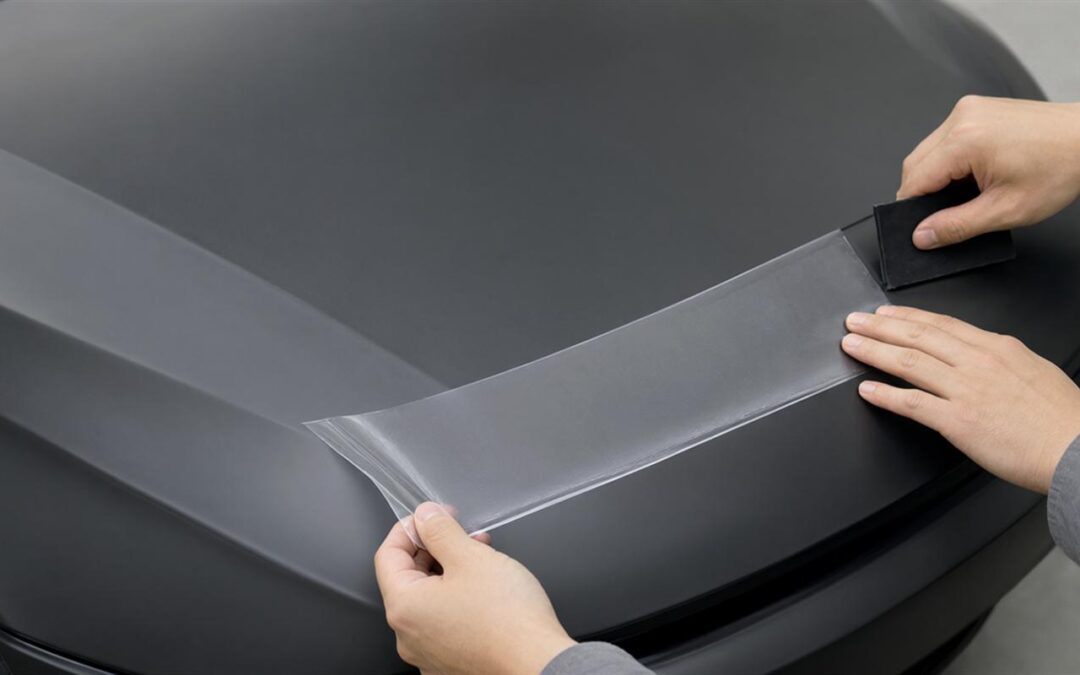
Film sits over the paint and takes that impact before it reaches the finish. A stone that would otherwise chip through the clearcoat and the color coat hits the film instead, and the paint underneath stays intact. Distance and speed decide how much of this a car meets. A driver who leaves a gap in traffic and stays out of the left lane during a wind event will collect less debris than one who follows a dump truck for twenty miles, and no amount of washing changes that. Summer adds its own load, with strong sun and hot panel surfaces that work on the finish month after month.
What Front-End Coverage Actually Means
A front end paint protection film package can describe three quite different jobs. Some shops quote the bumper cover alone. Others pair that cover with part of the hood, part of the front fenders and the mirror caps, and call it a partial front. A full front takes the bumper cover, the whole hood, both front fenders, the mirror caps, the headlights and sometimes the A-pillars and the front edge of the roof. The same words get used for any of the three, so the useful question at the counter is not which package a shop is quoting but where the film stops.
- A bumper-cover job protects the front bumper cover alone, leaving the hood and fenders bare.
- A partial front adds the forward section of the hood, part of each front fender and the mirror caps.
- A full front adds the whole hood, both complete fenders, the headlights and often the forward roof edge.
- Full-hood coverage removes the horizontal seam that a partial hood leaves behind.
Film that stops partway across a hood leaves a visible line where it ends, and that line sits on the panel a driver looks at most. It also sits where a cut edge can catch a wash mitt and gather a faint ridge of dust and wax. An edge that can be wrapped around the back of a panel holds better than one cut short of the edge, so the placement of the film’s edges matters as much as the list of panels.
Full-Body Coverage: What It Changes and What It Does Not
Full-body coverage runs over every painted exterior panel, doors, roof and rear quarters included. It makes the most sense on a car that will stay in the household for years, that sits outside, and whose paint is dark enough that every chip reads from twenty feet. Cover only the front on a vehicle like that and the damage does not disappear; it moves to the doors and the rear quarters as the miles add up.
Film is not armor. A large stone, a hard strike at close range or a hit on a curved area with nothing solid behind it can still mark paint or leave a small dent, and every product has that limit. What film does is absorb the hundreds of small hits that would otherwise become chips. Because full coverage is the bigger commitment, the panel list deserves a conversation before anything is ordered, and the paint protection film service at Revive Auto Center sets out the areas the shop covers and the free consultation that comes before it.
Selective Panels: Where Film Earns Its Place
Not every car needs a front package. Some panels take repeated damage that has nothing to do with the freeway. The top ledge of the rear bumper is where grocery bags, toolboxes and suitcases land. Door edges meet whatever is parked beside them in a garage aisle. Rocker panels below the doors collect gravel thrown sideways by the front tires, and the front lip of each rear wheel arch does the same from its own wheel. The recesses behind door handles fill with fingernail scratches over a few years of daily use.
Selective coverage handles those areas one at a time. It suits a car that is mostly parked, a second vehicle that rarely leaves town, or an older car where the goal is to keep one panel presentable rather than to protect the whole finish. It also works as a staged approach: start with the bumper cover and the hood edge, drive a season, then add panels once the pattern of damage is clear. Drivers comparing products for the same car often end up weighing film against tinting and ceramic coatings, and this explanation of how paint protection film, window tint and ceramic film differ sorts out which product addresses which problem.
The Seam, the Edge, and the Panel You Might Replace
Partial coverage leaves a line across a hood, and that line behaves differently from a factory edge. It catches polish and wax, it gathers a faint dust ridge, and on dark paint it reads as a change in sheen. Some drivers never notice it. Others find it more distracting than the chips it was meant to stop, which is the real trade-off behind full-hood coverage rather than any difference in protection.
The other consideration is what happens to the panel later. Film is removable, and when a panel needs paint or body work the film comes off first and goes back on after the repair. That holds for a parking lot scuff as much as for collision damage, and it is worth knowing before film goes onto a bumper cover that has already been repaired once. A shop that inspects the panel before quoting film, rather than after, is the one that catches that history; there is a plain guide to what a bumper impact can hide behind the cover for anyone unsure what an earlier repair may have left behind.
When Film Follows Paint or Body Work
Order matters. Chips, scuffs and dents get repaired first, because film laid over a repaired area hides nothing and cannot fix a surface that is not flat. Fresh paint then needs time to fully harden before film goes on, and the paint work and the film installation have to be scheduled around that gap. A shop that handles both in house can set that sequence itself instead of sending the car between two businesses and hoping the timing holds. At Revive Auto Center, paint and refinish work and film installation are planned as one job, with body repair, color matching, tinting and detailing available at the same Phoenix location.
A color change is the other case worth planning around. A respray changes which panels exist to protect and what the film will sit on, so the decision between a small repair and a full color change usually comes first. This guide to deciding between paint repair and a color change walks through that call. Once the finish is settled, the film plan follows it: paint that has hardened, a clean surface, then coverage. Washing a filmed panel is not much different from washing paint, though the edges want a close look every few weeks, and the shop’s detailing and finish care includes that inspection during a wash.
How to Decide at the Shop
The choice usually comes down to three questions. How many freeway miles does the car see in a month? How long will it stay in the household? How does the paint read up close today? A car with a long commute, a five-year horizon and a nose already freckled with chips argues for more coverage rather than less. A car that is parked most of the week and driven on surface streets argues for a shorter list.
Then the panel list gets matched to what the film is protecting. Revive Auto Center applies film to the vulnerable areas around the hood, fenders and bumpers, and can talk through the forward faces that take the most hits on a Phoenix commute. Because the shop works independently of insurance company agreements, the conversation about PPF coverage stays about the car rather than about a claim, and by law a vehicle owner may choose any repair shop for the work. Free consultations and free estimates make it practical to compare one option against another, and you can request a free estimate and booking when you are ready to look at the car in person.
Key Takeaways
- Coverage is a panel list rather than a package name, and two shops can mean different things by a partial or full front.
- Rear bumper ledges, rocker panels and door edges collect damage that no front package ever touches.
- A partial hood leaves a visible seam, which is a cosmetic decision rather than a protective one.
- Film reduces chips from small debris but cannot stop a large strike or a dent.
- Coverage should follow the freeway miles, the length of ownership and the condition of the paint today.
Conclusion
The right amount of film is the amount that matches how the car is used and what its paint looks like now. A daily commute on Interstate 10 or Loop 101 builds a different pattern of damage than a short trip to the store, and the panel list should follow that pattern instead of a label on a package. For Phoenix drivers who want the trade-off explained before anything is ordered, Revive Auto Center offers a free estimate and a consultation that starts with the car in front of it.