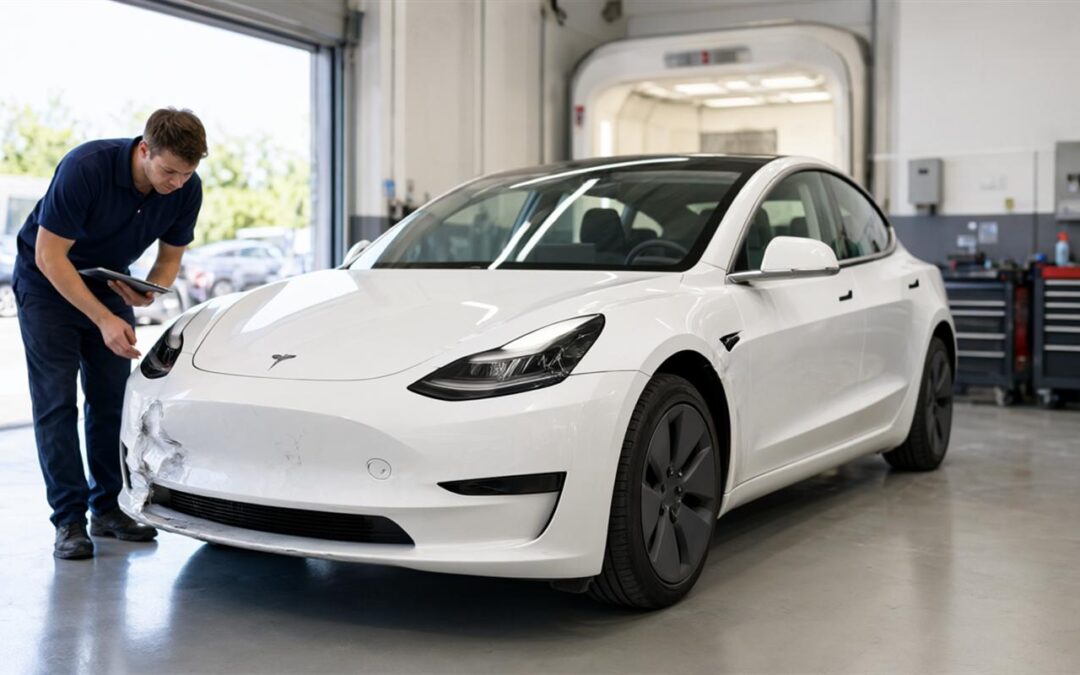
An accident in a Tesla raises questions that a gas car does not. The damage you can see is only part of the story, because cameras, sensors, and a high-voltage battery pack sit inside the same bodywork that took the hit. At Revive Auto Center, we handle Tesla collision repair in Phoenix, from minor dents and bumper damage to more extensive collision repairs. We also know what to look at before you approve anything.
This guide covers what to check in the first few minutes after a collision, what to watch for in the days that follow, and what to ask for at the estimate. If your Tesla’s touchscreen shows warnings after an accident, do not dismiss them. Get a free estimate and a second set of eyes on the vehicle.
Why Tesla Collision Repair Is Different
Tesla collision repair Phoenix is different from work on a gas car, and not because of the badge. The difference comes from where the parts sit and how the body is built. The high-voltage battery pack sits low in the vehicle floor, so anything that reaches the underside needs close inspection. The body structure mixes aluminum and steel, and those two metals need specific repair methods.
A Tesla also carries cameras and sensors around the body to support driver-assist features. A collision can affect how those systems read the road, so an inspection should cover them along with the panels. Paint adds another layer: color on a Tesla can vary slightly from panel to panel, so matching takes care. Panel gaps and paint finish are visible measures of how well a repair was done.
Regenerative braking reduces how often the brake pads are used, but brakes still wear and still need inspection. Our team includes Tesla owners, and we repair collision and body damage on these vehicles. You can read more about our Tesla repair services before you book.
What to Check Right After a Tesla Accident
The first few minutes after an accident are stressful, but a short walk-around helps you stay safe and make better decisions about the car. Work through these in order.
- Get to a safe place first. If the Tesla still drives, move it to the shoulder or another spot away from traffic, and turn on the hazard lights.
- Look at the bumpers and panels. Walk around the car and note dents, cracks, or panels that sit proud of the body, especially at the front and rear bumpers.
- Check the lights. Confirm that headlights, taillights, turn signals, and brake lights still work, and note any lens that is cracked or broken.
- Inspect the charge port. Look for damage to the port and the panel around it, since that area takes hits in rear and side impacts.
- Examine the wheels and tires. Look for bent rims, sidewall damage, and tires that have lost pressure, and note any wheel that took a direct hit.
- Look underneath the car. Check for fluid leaks and for debris hanging below the vehicle. Because the battery pack sits low, anything that reached the underside matters.
- Read the touchscreen. Power the Tesla on and look for warning messages. Many faults report through the screen, so write down what you see and when it appeared.
If you find damage in any of these areas, have the vehicle inspected before you keep driving it. Our collision repair services cover Teslas, and we can tell you what needs attention and what can wait. If you want to do a more careful walk-around yourself, our vehicle inspection checklist for panels, lights, tires, and alignment takes you through it step by step.
What to Observe in the Days After the Accident
Tesla accident repair Phoenix often starts with a second look, because the damage that changes a repair plan tends to show up after a few days of driving. A panel that looked straight can sit differently once the car is driven, and a system that worked on the first trip can start sending messages later.
Keep an eye on the touchscreen for new warnings. The cameras and sensors that support driver-assist features report through the screen, so a new alert is worth writing down along with when it appeared. Watch how the doors, trunk, and frunk close as well. Panel gaps that no longer line up, or a latch that needs a harder push than before, tell you the body has moved.
After rain or a car wash, check the trunk and frunk for moisture. Water inside means a seal was disturbed in the impact. While driving, note any new noise, vibration, or pull, because suspension damage often shows up as a change in how the car tracks. Charging trouble is another signal worth reporting, since it can point to damage around the charge port or the battery pack.
Climate control deserves the same attention. If the air conditioning stops cooling the way it did before, the system needs a look, and Phoenix heat will not improve it. If any of this shows up, bring the Tesla in for a checkup instead of waiting for the next service. Our article on Tesla diagnostic checks before you approve a repair covers the questions worth asking at that point.
What to Ask For at the Estimate
An estimate is where a repair gets defined, so the conversation matters as much as the number at the bottom. EV collision repair Phoenix is no exception, because the parts and the paint decisions are both on the table at that point.
Ask for a written estimate that lists the work, and ask to see photos of the damage. The document should separate the parts that will be replaced from the parts that can be repaired, so you know what you are paying for. If a structural measurement is planned, ask for it to be listed. A bent body is not something you can spot from the outside.
Paint is the next question. How paint matching works on a Tesla takes care, because color can vary slightly from panel to panel, and the goal is a repair that does not announce itself. Ask how the shop will match the finish and how the panel gaps will be checked before the car comes back to you.
Cameras and sensors belong in the estimate too. Ask whether diagnostic work is included and what it covers, because those systems support features you rely on every day. We are not bound by insurance company agreements, so we can recommend and use parts best suited to your vehicle, and we accept all collision repairs regardless of insurance provider. Our guide to what to expect during a collision repair estimate walks through the same steps.
How We Handle Tesla Collision Repair in Phoenix
When your Tesla needs collision repair in Phoenix, bring it to a shop that works for you. Revive Auto Center is at 732 E. Dunlap Avenue, Phoenix, AZ 85020, and you can reach us at (602) 675-2851.
We have over 25 years of experience, and our team includes Tesla owners who drive and service these vehicles. We handle Tesla collision and body repair, from minor dents and bumper damage to more extensive collision repairs, with frame straightening, panel replacement, paint matching, and refinishing as part of the work.
We are not bound by any insurance company agreements. By law, you have the right to choose any repair shop you prefer, and we accept all collision repairs regardless of insurance provider. Because we are not tied to an insurer’s repair program, we can recommend the parts that suit the vehicle. Phoenix heat and sun are hard on paint finishes and climate systems, so a repair here should hold up to both. You can read more about our insurance independence and what it means for your repair.
Estimates and consultations are free. Call us or book online, and we will look at the damage and explain your options in plain language.
Tesla Collision Repair Questions Phoenix Owners Ask
Can I Choose My Own Shop for Tesla Collision Repair?
Yes. By law, you have the right to choose any repair shop you prefer. We are an independent auto repair and collision shop in Phoenix, and our team includes Tesla owners who drive and service these vehicles.
Do You Work With My Insurance Company?
We accept all collision repairs regardless of insurance provider. We are not bound by any insurance company agreements, so we can recommend and use parts best suited to the vehicle. Request a free estimate when you are ready to have the damage looked at.
Can You Match Tesla Paint?
Yes. We handle Tesla collision and body repair, including paint matching and refinishing. Your Tesla’s paint color can vary slightly from panel to panel, so we take care to match the finish across the repaired area and the panels around it.
Is a Free Estimate Really Free?
Yes. Estimates and consultations are free at Revive Auto Center. We have over 25 years of experience with collision and body repair, and the estimate is where we explain what your Tesla needs before any work begins.