Quick Answer: A collision repair estimate identifies damage that can be seen, outlines the repair work likely needed, and explains what may require a closer look before repairs begin. At Revive Auto Center, the estimate is the starting point for a clear repair plan, not just a number attached to a damaged vehicle.
After an accident, a dent, cracked light, scraped bumper, or misaligned panel raises an immediate question: is that all that was damaged? A collision repair estimate provides a practical starting point by documenting visible issues, reviewing the vehicle’s condition, and explaining the next repair steps.
What Is a Collision Repair Estimate?
A collision repair estimate is a written assessment of visible vehicle damage and the repair work that appears necessary during the initial inspection. It may include anticipated parts, labor, body repairs, paint and refinishing work, and related electrical or vehicle-system concerns when the impact area calls for them.
An estimate is not the same as every final decision connected to the repair. It separates three parts of the process:
- Initial estimate: Documents damage that can be identified during the first inspection.
- Complete repair plan: Develops as the vehicle is inspected further and repair work is evaluated.
- Insurance decisions: Coverage, fault, and claim decisions are separate from the repair shop’s assessment of the vehicle.
Many customers expect the first document to reveal every repair detail. Exterior damage does not always show what happened behind a panel, bumper, light, or trim piece. A thorough estimate begins with what is visible and explains when further inspection may be needed.
For a fuller view of the work involved after an impact, explore Revive Auto Center’s collision repair services.
What Happens During a Collision Repair Estimate?
A collision repair estimate generally follows a practical inspection process: reviewing the damage, documenting what is visible, identifying repair concerns, and explaining what happens next. The exact scope depends on where the vehicle was hit and how the impact affected nearby components.
- Discuss the collision: Review what happened and any changes noticed after the impact.
- Inspect the vehicle: Perform a walk-around and review visible damage.
- Assess affected areas: Look at panels, bumpers, paint, lights, trim, glass, wheels, and related components.
- Identify additional concerns: Consider whether electrical, sensor, lighting, mechanical, or safety-system issues may need further evaluation.
- Document the damage: Take photos and record the visible repair scope.
- Explain next steps: Prepare the initial estimate and discuss what is needed before repairs move forward.
Initial Walk-Around and Damage Discussion
The estimate generally begins with the vehicle and the details you have noticed. If a door no longer closes correctly, a warning light appeared after the impact, the steering feels different, or a new noise started, that information helps focus the inspection on the affected area.
It is easy to focus on the largest visible dent and overlook smaller changes in how the vehicle drives or functions. Those details can help identify areas that may need a closer look beyond the exterior finish.
Inspection of Visible Damage
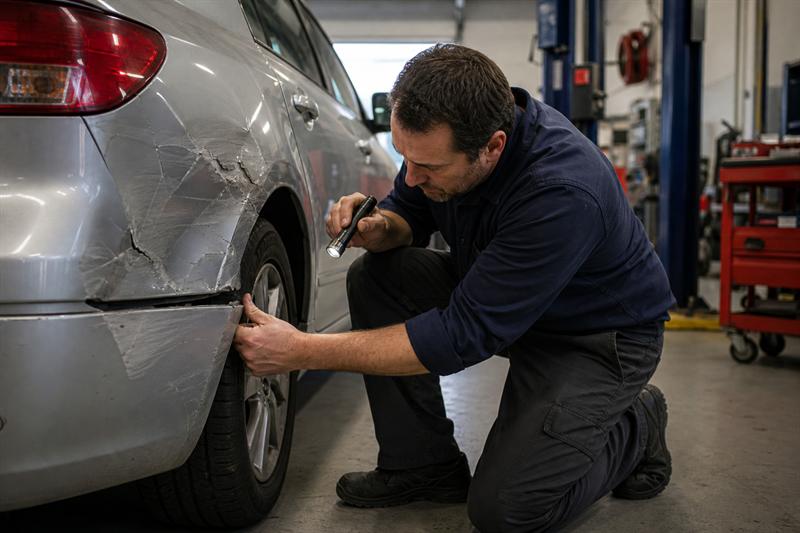
The estimator reviews damage that can be seen without removing parts. This usually includes the impact area and related exterior components that may have been affected.
- Body panels and bumpers
- Paint damage, scratches, and cracked finishes
- Headlights, taillights, trim, and grilles
- Glass, wheels, and nearby exterior components
- Panel gaps, alignment concerns, and damaged mounting areas
Visible damage is the starting point, not always the full answer. A bumper cover can look like a cosmetic issue while the hardware behind it may need inspection. Even low-speed impacts can affect components behind an exterior piece, so the repair path depends on the condition of the affected area.
Documentation and Repair Planning
Photos and written notes create a record of the damage identified during the estimate. That documentation supports conversations about repair scope, parts, paint work, and the steps needed before repairs are scheduled.
Some vehicles need more evaluation before every detail is known. When damage involves lighting, electrical components, sensors, or parts hidden behind exterior panels, the repair plan may need to account for findings from a closer inspection. Addressing those findings helps ensure the repair scope reflects the affected area, not only its exterior appearance.
What Should You Bring to a Collision Repair Estimate?
Bring the vehicle if it is safe and practical to do so, along with information that helps explain the damage or organize the repair process. Not every item is needed for every appointment, but relevant details can reduce back-and-forth and give the estimator a clearer picture.
- Vehicle registration or identifying information, if requested
- Insurance claim details, if a claim has already been opened
- Photos of the damage or incident, if available
- A list of changes noticed after the impact, such as warning lights, noises, or alignment concerns
- Questions about parts, paint, repair updates, and scheduling
You do not need every insurance question resolved before understanding the vehicle’s visible repair needs. Claim information can be useful when available, while coverage and policy questions remain separate from the inspection itself. Revive Auto Center provides insurance-related repair information to help customers understand where the repair and insurance processes meet.
Why Can a Collision Repair Estimate Change?
A collision repair estimate can change when further inspection reveals damage that could not be seen during the initial walk-around. The first estimate is based on visible conditions. The repair plan becomes more complete when affected parts are removed, underlying areas are inspected, or vehicle-specific repair procedures are reviewed.
For example, damage to a bumper or quarter panel can extend to brackets, mounting points, wiring, supports, lighting components, or nearby sensors. The visible panel tells the estimator where to begin, but it does not always show the condition of everything behind it.
Hidden Damage Can Be Found After Further Inspection
Hidden damage is not automatic after every collision, but it is possible when an impact affects more than the exterior surface. A repair plan may need to expand when components behind the visible damage are affected.
If you see a loose bumper, uneven panel gaps, a new warning light, a damaged light assembly, or changes in how a door or hatch closes, those signs are worth mentioning during the estimate. They can indicate that the affected area needs a more detailed inspection before the scope is finalized.
A changing estimate does not necessarily indicate a problem with the initial inspection. Additional repair needs may be identified when the initial damage involves parts that cover, support, connect to, or protect other components.
- A bumper, panel, or trim piece is loose or misaligned
- A warning light appeared after the collision
- Lighting, sensors, or electrical features are not working as expected
- The vehicle has new noises, steering concerns, or closing problems
When these signs are present, further evaluation may be needed before the repair scope is complete.
What Is a Supplement in Collision Repair?
A supplement in collision repair is an update to repair documentation after additional damage or repair needs are identified. It reflects information that was not observable during the first inspection, such as an affected mounting point behind a bumper or a component found after a panel is removed.
- It identifies additional repair work connected to the collision damage.
- It updates the repair plan as more information becomes available.
- It should explain what was found and why the scope changed.
A supplement does not automatically mean the first estimate was incomplete or careless. It can mean the inspection moved from visible damage to a more complete view of the affected area. Clear communication helps keep that process understandable rather than unexpected.
What Affects the Cost of Collision Repair?
Collision repair cost is shaped by the damage location, the work required, and the vehicle systems involved. The most useful way to compare estimates is to look at the documented repair scope, not only the total at the bottom of the page.
- Extent of damage: A small exterior mark and a multi-component impact require different levels of work.
- Repair or replacement: Some components can be repaired, while others need replacement based on their condition and repair requirements.
- Parts and labor: Removing, repairing, fitting, and reinstalling components requires different amounts of work depending on the damaged area.
- Paint and refinishing: Surface preparation, color matching, blending, and refinishing depend on the repair scope.
- Vehicle technology: Lights, cameras, sensors, wiring, and electrical components near the impact area may require additional evaluation.
- Vehicle-specific needs: The make, model, and applicable repair procedures influence what work is needed.
Paint and Refinishing Can Be Part of the Repair Scope
Paint work after a collision involves more than covering a scratch. The affected area may need preparation, repair, refinishing, color matching, or blending so the repaired section fits the surrounding finish. The exact paint scope depends on the location and condition of the damage.
Paint quality depends on the preparation and refinishing steps included in the repair plan. Revive Auto Center’s paint services are available when refinishing is part of the documented repair scope.
Vehicle Technology May Require Additional Evaluation
Newer vehicles often place lighting, cameras, sensors, wiring, and other electrical components close to bumpers, mirrors, grilles, and body panels. When one of those areas is damaged, the estimate may need to consider more than the exterior appearance.
If a warning light appears, a camera view changes, a light stops working, or a vehicle feature behaves differently after an impact, the affected area may need further evaluation. These changes can indicate that the repair scope extends beyond paint or body damage.
Questions to Ask Before You Leave the Estimate Appointment
The right questions help you understand what the estimate covers now and what could change after further inspection. A clear answer should explain the repair path, not simply repeat a total.
- What damage is visible at this stage?
- Could additional damage be found after disassembly or closer inspection?
- What is the next step before repairs can be scheduled?
- How will repair updates be communicated?
- What information is still needed from me?
- Are paint, electrical, lighting, or sensor-related repairs part of the current scope?
- What should I do if the vehicle develops a new concern before repairs begin?
Before repairs move forward, it helps to understand how updates will be handled if the scope changes. That context makes a revised estimate easier to follow if additional repair needs are identified.
How Revive Auto Center Approaches Collision Repair Estimates
Revive Auto Center begins with the vehicle’s observable repair needs and explains what the inspection shows. Free estimates give customers a direct way to understand visible damage, likely repair work, and whether additional evaluation may be needed.
The estimate process focuses on the condition of the vehicle and the work identified during inspection. If insurance claim information is available, it can help organize repair-related documentation while coverage and claim decisions remain separate from the repair assessment.
- A review of visible collision damage and related concerns
- Clear discussion of what the estimate includes at the initial inspection
- Direct explanation when more inspection is needed to complete the repair scope
- Repair-focused communication about body work, paint, electrical concerns, and specialized vehicle needs when relevant
A useful estimate does more than provide a number. It creates a documented starting point and makes the next repair decision easier to understand.
Key Takeaways
- A collision repair estimate documents visible damage and the repair work identified during the initial inspection.
- The first estimate is a starting point. Further inspection can reveal damage behind panels, bumpers, trim, or connected components.
- Photos, claim information if available, and a list of vehicle concerns help make the estimate appointment more productive.
- Repair cost depends on the documented scope, including parts, labor, paint work, and vehicle-system concerns.
- Clear communication about possible estimate updates helps prevent confusion later in the repair process.
Conclusion: Request a Free Collision Repair Estimate
After a collision, the question is not only what damage is visible. It is also whether the repair plan accounts for the affected area, the components behind it, and the changes you noticed once the vehicle was back on the road.
Visible damage may be only part of the repair picture. Loose components, electrical concerns, lighting issues, panel-fit problems, and paint work can all affect the final scope depending on the impact area. Revive Auto Center provides a repair-focused estimate process that explains what is visible, what may need closer evaluation, and how the repair plan can move forward.
Request a free collision repair estimate from Revive Auto Center for a clear starting point for your repair plan.
Collision Repair Estimate FAQs
How long does a collision repair estimate take?
The time needed for a collision repair estimate depends on the amount of visible damage and the areas affected. A vehicle with one clear exterior impact generally requires a different level of review than a vehicle with damage across multiple panels, lights, wheels, sensors, or electrical systems.
The key distinction is between an initial visible-damage assessment and a repair scope that needs deeper inspection. A faster review does not necessarily mean the full scope is known when the impact area involves components hidden behind exterior parts.
Do I need an insurance claim before getting a collision repair estimate?
No. A collision repair estimate focuses on the vehicle’s visible damage and anticipated repair work, while a claim concerns the insurance side of the situation. If a claim has already been opened, the claim information can help organize repair-related documentation.
An estimate explains the repair needs identified during inspection. Coverage, policy terms, fault, and claim decisions are separate from the condition of the vehicle.
Can a collision repair estimate change after the repair begins?
Yes. An estimate can change when further inspection identifies repair needs that were not visible at the initial appointment. Removing a damaged bumper or panel, for example, can reveal an affected bracket, mount, internal support, wiring connection, or sensor-related component behind it.
This update is commonly called a supplement. What matters most is that the revised repair documentation explains what was found and why it changes the repair plan.
What Is Included in an Auto Body Repair Estimate?
An auto body repair estimate generally includes the visible damage identified during inspection and the work that appears necessary at that point. Depending on the vehicle and impact area, it can include anticipated parts, labor, panel repair or replacement, paint preparation, refinishing, and related evaluation of lights, electrical components, or other systems.
It is an initial repair document, not confirmation that every affected part has already been identified. Damage behind exterior components can require further inspection before the repair scope is complete.
Should I Get More Than One Collision Repair Estimate?
Some vehicle owners compare estimates, but the total amount should not be the only comparison. Two estimates can differ because they describe different repair scopes, not simply because one shop charges more or less.
Look at whether the estimate explains visible damage, anticipated parts and labor, paint or refinishing needs, possible additional inspection, and how updates will be handled. A useful estimate makes the repair path clear instead of leaving unanswered questions behind a single total.
What Should I Ask a Body Shop About Hidden Collision Damage?
Ask what damage is visible during the first inspection, what areas may need closer evaluation, and how you will be updated if additional repair needs are found. The exterior surface does not always show the condition of brackets, mounts, wiring, supports, or components behind the impact area.
Hidden damage is not guaranteed after every collision. The important question is whether the shop explains the inspection limits clearly and has a process for updating the repair plan when new information is identified.