At Revive Auto Center, this decision usually comes down to three things: how far the damage extends, what condition the existing finish is in, and whether the goal is correction or transformation. Many vehicle owners assume the choice is between a small touch-up and a full repaint, but there is often a middle ground, and that middle ground matters.
This is also where people can lose time and money. Trying to solve a widespread finish problem with a small repair, or treating a customization goal like a standard paint repair, can lead to results that still look inconsistent.
Paint repair and color change are not the same type of job
Paint repair fixes damage. A color change changes the overall look of the vehicle. Between those two is paint matching and blending, which is often the right path when one panel or one repaired area needs to work visually with the rest of the car.
There are four different paths:
- Paint repair: fixing isolated chips, scratches, scuffs, or surface damage
- Paint matching and blending: refinishing a repaired area so it works with surrounding panels
- Full same-color repaint: restoring a vehicle whose finish is failing or inconsistent across larger areas
- Full color change: changing the vehicle to a different color with a much broader refinishing scope
That distinction matters because each option addresses a different kind of problem. If the issue is local, broader refinishing is often unnecessary. If the issue is spread across the vehicle, a small repair usually does not address the larger finish problem.
What counts as paint repair
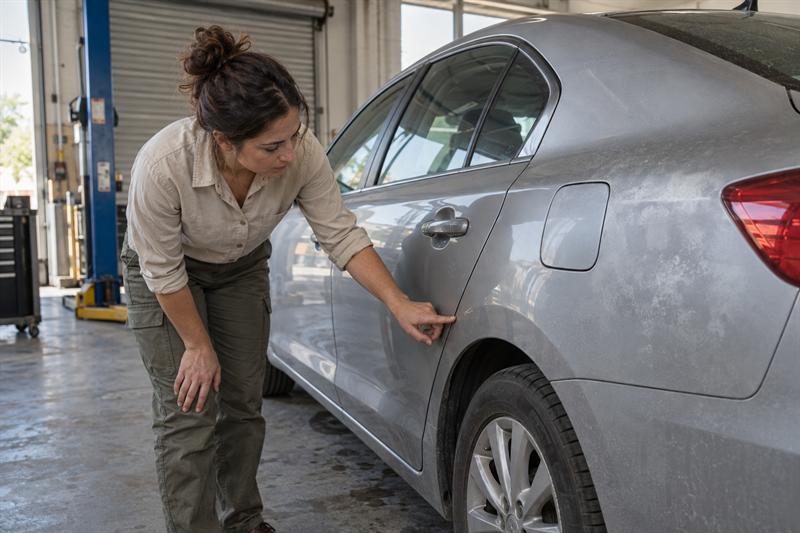
Paint repair usually means damage that stays contained to a small area. Rock chips on the hood, a scratch on one door, or a scuff on a bumper are common examples. In those cases, the goal is to correct the defect without changing the rest of the vehicle’s appearance.
This is common on daily drivers. The surrounding paint still looks good, but one spot has been damaged. When the finish around that damage is healthy, targeted repair usually makes more sense than treating the whole vehicle like it needs to be repainted.
What counts as paint matching and blending
Paint matching and blending comes into play when the damaged or repaired area has to transition visually into the panels around it. This is common after minor body repair, panel replacement, or localized refinishing where the original finish is still being preserved on nearby panels.
A lot of owners assume the factory paint code settles everything. It does not. Older paint can shift from years of heat and sun exposure, especially on upper surfaces. In those cases, paint matching is not just about the formula. It is about how the repaired area blends into the finish the vehicle actually has now.
What counts as a full color change
A full color change is not just repainting what is easy to see. It is a larger project meant to make the vehicle look intentionally different, not simply corrected. That means consistency matters across visible transitions, edges, and surrounding surfaces.
This is where people may underestimate the scope. If the exterior gets one color and other visible areas still show the old finish, the job can look incomplete. A color change generally makes the most sense when the goal is a true appearance reset, not just fixing damage.
When paint repair may be the better option
Paint repair is usually the better option when the damage is isolated and the rest of the finish still looks stable. If the surrounding paint still holds its gloss, color, and clear coat integrity, repairing one area is usually more practical than expanding the job.
This is where restraint matters. Bigger is not always better. If the real issue is one scratch or one chipped section, a full repaint adds cost and downtime without solving a broader problem because there may not be one.
Chips, scratches, and isolated panel damage
Rock chips, parking lot scratches, and bumper scuffs are classic paint repair situations. These problems are visible, but they do not usually justify repainting the entire vehicle when the rest of the finish still looks consistent.
If you are seeing damage that stays in one area and the rest of the panel still looks sound, that usually points toward repair. This is especially true when the damage is cosmetic rather than part of a broader finish failure.
Minor collision-related refinishing
After a small impact, one repaired area may only need localized refinishing if the surrounding finish is still in good condition. The key is that the paint plan should follow the repair, not the other way around. If the panel was repaired properly and the adjacent finish is stable, the scope can often stay limited.
This is where paint should not be evaluated in isolation. Minor collision damage can still affect edges, contours, and how light reflects off nearby panels. If the vehicle has had even a small hit, a careful inspection matters. For a broader look at what to check after light damage, see this vehicle inspection checklist after a minor collision.
When preserving the original finish matters
Some owners want to keep as much original finish as possible. That usually comes up when the vehicle is otherwise clean, when originality matters, or when the goal is to avoid unnecessary refinishing on unaffected areas.
That approach makes sense when the original paint is still holding up well. If most of the finish still looks right, preserving it usually leads to a cleaner repair strategy than expanding the work just because damage is visible.
When a full repaint or broader refinishing may make more sense
A full repaint or broader refinishing may make more sense when the issue is no longer local. If the vehicle has widespread fading, peeling clear coat, or uneven wear across multiple panels, a spot repair usually leaves the bigger problem untouched.
This often becomes more noticeable when the finish has already started to break down on upper surfaces. One repaired section may look fresher for a while, but the rest of the vehicle can continue aging around it. That can result in a patchwork appearance instead of a more consistent correction.
Widespread fading, peeling, or clear coat failure
When the hood, roof, trunk lid, or upper door sections are heavily sun-worn, the problem is no longer just color. The finish system itself may be failing. Once that happens across multiple areas, isolated repair often stops being the most practical answer.
In Phoenix, prolonged sun exposure can be especially hard on exterior finishes. Clear coat breakdown, chalking, and top-surface fading do not always stay contained to one area. They can make small repairs look more obvious over time. That is where broader paint services may become the more realistic path.
Multiple panels with mismatched aging
Some vehicles do not have severe peeling, but they still have finish inconsistency across multiple panels. One panel may be more faded, another may have older repair work, and another may still look relatively close to original. That creates matching problems even before new work starts.
If you are seeing panel-to-panel variation already, that usually means a localized repair will have to work against an uneven baseline. This is where broader refinishing may produce a more consistent result than trying to keep every correction confined to one spot.
Restoration or appearance reset goals
Sometimes the issue is not just damage. It is that the vehicle may need a broader appearance reset. Older vehicles, project cars, and cars that have accumulated years of cosmetic wear often fall into this category.
That is different from standard paint repair. Repair fixes defects. Restoration-level refinishing resets the finish as a whole. If the vehicle is already being evaluated in that context, it also helps to understand how repair and restoration differ overall. This comparison of auto body restoration vs. collision repair gives useful context.
If you are seeing these signs, the vehicle may need more than a small paint repair:
- Clear coat is peeling or breaking down on more than one panel
- The hood and roof are visibly more faded than the sides
- Previous paint work already looks different from adjacent panels
- New damage is showing up on top of an already worn finish
When those patterns are present, broader refinishing is often the more practical next step.
When changing the color is worth considering
Changing the color is worth considering when the goal is customization or a full appearance transformation, not just correction. If the owner wants a different look entirely, a color change can make sense. If the goal is only to fix damage, it usually does not.
This is an important line. A lot of people start exploring a color change because the vehicle already needs paint work somewhere. That alone is not always enough reason. A color change is a bigger commitment, and it should be driven by the end result you actually want.
Style and customization goals
Some owners simply want the vehicle to look different. That is a customization decision, not a repair decision. In that case, the question is not whether the paint is damaged enough to justify the work. The question is whether the owner wants the added scope that comes with changing the vehicle’s overall appearance.
That difference matters because repair decisions are based on condition. Color change decisions are based on preference and finish consistency.
Why color changes are more involved than most owners expect
A color change requires more than spraying new color on the outside panels. It usually involves more prep, more disassembly, more refinishing detail, and more attention to every place the old color could still show through.
This is where problems start when the job is viewed too simply. If the visible exterior is changed but transitions and surrounding areas are not handled correctly, the result can look partial instead of intentional. That is why a full color change sits in a different category from standard repair or same-color refinishing.
Areas that may need attention beyond the exterior panels
Visible consistency depends on more than doors, fenders, and bumpers. Edges, jambs, underhood-visible areas, and transition points all affect whether the vehicle looks fully changed or just partly repainted.
That usually becomes obvious after the work is done. If those areas are ignored, the old color can still show up in places owners see every time they open a door or view the vehicle from an angle. That is what makes full color changes more involved than people expect.
The biggest factors that determine the right choice
The right choice usually comes down to damage scope, paint condition, ownership goals, and finish expectations. Cost matters, but it should not be the only filter. The wrong scope can lead to paying twice, either because the repair was too small for the condition or too large for the problem.
If you are trying to decide between repair, matching, repainting, or a color change, start with the condition of the vehicle. Then look at the result you actually want from the work.
Extent of damage
One damaged area points toward repair. Several damaged panels or widespread finish breakdown points toward broader refinishing. This is one of the clearest decision markers.
If the damage is truly isolated, a full repaint usually overreaches. If the vehicle has multiple failing areas, a spot repair usually under-corrects the problem.
Current paint condition and sun exposure
Sun exposure changes a lot because it changes the finish you are trying to match or preserve. Faded paint, oxidized surfaces, and top-panel wear make localized repair harder to hide cleanly.
If you are seeing strong wear on the hood, roof, or upper panels, that usually means the decision should be based on overall finish condition, not just the newest visible damage.
Vehicle age, use, and long-term plans
A daily driver with one scratch should not be treated the same way as a long-term project vehicle with years of finish wear. The vehicle’s role matters because the right solution depends on whether the goal is basic correction, long-term appearance, or a broader restoration plan.
This is something that gets misunderstood. The same paint flaw does not always point to the same recommendation. The context of the vehicle changes the practical answer.
Budget, downtime, and finish expectations
Budget matters, but it should be aligned with scope. A low-cost repair on a failing finish usually leads back to the same problem. A large refinishing job on a vehicle with only isolated damage usually spends money where it is not needed.
The better question is not just what costs less today. It is what level of work actually fits the condition of the vehicle and the result expected when the job is complete.
Paint matching vs full repaint: what vehicle owners often misunderstand
The biggest misunderstanding is thinking that a paint code guarantees an invisible match. It does not. Paint matching is about how the repaired finish looks next to the current vehicle, not just what formula appears on paper.
This is a common disconnect in paint conversations. Owners often focus on the color itself, while the harder part is how that color sits next to aged, faded, or previously repaired panels.
Why factory color codes are only part of the answer
A factory code tells you what the vehicle started as. It does not tell you exactly what the finish looks like today after years of use, sunlight, washing, exposure, and wear.
That distinction matters because the job is not to recreate a factory swatch. The job is to make the repaired area look right on the vehicle in front of you. That is why formula alone is not the whole answer.
Why fading changes matching strategy
Fading changes how new paint sits next to old paint. Even when the repair is technically correct, fresh material next to sun-worn material creates contrast. That contrast is what makes blending so important.
This usually becomes more noticeable on vehicles with strong top-side exposure. The more uneven the wear, the more strategy is needed to make the result look natural instead of sharply separated.
Why blending adjacent panels may be recommended
Blending is recommended because the visual transition matters as much as the repaired panel itself. If the repaired area stops too abruptly against older surrounding paint, the eye catches the difference immediately.
This is not extra work for the sake of extra work. It is a refinishing decision meant to reduce visible contrast. When blending is needed and skipped, the result often looks repaired instead of cohesive.
If the vehicle has body damage, paint should not be looked at in isolation
Paint should follow proper body repair. If the panel underneath is not corrected the right way, the finish on top can still reveal the problem. That is why paint decisions should not be separated from what is happening below the surface.
This is especially true after dents, creases, or collision damage. The paint choice depends on how the panel is repaired, whether the existing finish can be preserved, and how much refinishing is actually needed after the structural or cosmetic correction is complete.
When collision repair affects refinishing scope
Collision repair changes refinishing scope because the panel may need repair, replacement, or reshaping before paint even enters the conversation. Once that happens, the surrounding finish becomes part of the decision too.
If the vehicle is already moving through an estimate process, it helps to understand how repair scope is evaluated. This guide on what to expect during a collision repair estimate is useful if body damage is part of the paint question.
When dent repair may reduce the need for broader paint work
Some dents can be corrected without the same level of paint involvement, depending on the shape of the damage and whether the finish is still intact. That is where repair path matters. Not every dent pushes a vehicle into traditional body and paint work.
If the damage is more about metal shape than finish failure, that usually changes the recommendation. This is exactly why understanding paintless dent repair vs. traditional body repair helps before deciding how far paint work really needs to go.
A simple way to decide which path fits your vehicle
If the damage is small and the finish around it still looks healthy, repair is usually the right path. If one area has been repaired and needs to visually work with surrounding panels, matching and blending is usually the answer. If the finish is failing across multiple panels, full repainting usually makes more sense. If the goal is a different look entirely, that is a color change.
The mistake is treating all of those like the same service. They are not. Once the condition and the goal are clear, the right path usually becomes much easier to identify.
Choose repair if…
Choose repair if the damage is limited, the surrounding finish still looks stable, and the goal is to correct a defect rather than reset the vehicle’s overall appearance. This is the most practical path for isolated cosmetic damage.
Choose match and blend if…
Choose match and blend if one repaired or replaced area needs to transition cleanly into the surrounding paint. This is usually the most practical middle-ground solution when the rest of the finish is still worth preserving.
Choose a full repaint if…
Choose a full repaint if wear, fading, peeling, or inconsistency affects multiple panels and localized repair would leave the vehicle looking uneven. This is usually what is needed when the finish condition, not just one damaged spot, has become the real problem.
Choose a color change if…
Choose a color change if the goal is a different appearance, not just fixing damage. Once the decision is driven by style rather than correction, the project shifts into a broader refinishing category.
Key Takeaways
- Paint repair is usually right for isolated chips, scratches, scuffs, and small damaged areas.
- Paint matching and blending is usually right when one repaired section needs to work visually with surrounding panels.
- Full repainting is usually right when the existing finish is failing or inconsistent across multiple areas.
- A color change is a separate decision driven by customization, not by ordinary paint damage alone.
- When body damage is involved, paint should be planned with the repair, not separately from it.
Conclusion
The real problem is not just damaged paint. It is choosing the wrong scope for the condition of the vehicle. When that happens, the finish can still look uneven, the repair can stand out, or the broader paint failure can continue around the area that was just fixed.
If isolated damage is treated like a full repaint job, money can be wasted. If widespread fading or clear coat failure is treated like a small repair, the result may still look uneven. And if a color change is approached like a basic touch-up, the vehicle can end up looking incomplete.
At Revive Auto Center, the practical next step is to evaluate the vehicle based on what is actually happening with the finish, the panels underneath it, and the result the owner wants. That is the only way to know whether the vehicle needs targeted repair, accurate paint matching, broader refinishing, or a full color change. If the paint issue is already visible enough to raise the question, it is usually time to stop guessing and have the scope defined correctly.
How Revive Auto Center approaches the decision
Revive Auto Center approaches paint work by separating the actual problem from the assumed solution. That means looking at whether the issue is isolated damage, aging finish, previous repair mismatch, or a true color-change goal before recommending scope.
This matters because a lot of paint decisions go wrong at the beginning. One common mistake is focusing on the newest visible damage while missing the larger finish condition around it. Another is assuming a code match solves everything when the vehicle’s real-world finish has already changed. The better approach is to define what is being preserved, what is being corrected, and what actually needs to be refinished to make the result look right.
FAQ
Can a damaged panel be repainted without repainting the whole car?
Yes, if the damage is limited and the surrounding finish is still in good condition. A single scratched door, chipped fender, or scuffed bumper often points to localized refinishing rather than repainting the whole vehicle.
The important issue is visual consistency. If the surrounding paint is still stable, a panel repair can make sense. If the rest of the finish is already faded or uneven, repainting one panel alone usually leaves the correction standing out against the larger condition problem.
Is paint matching enough if the rest of the car is faded?
It depends on how far the fading has gone, but once the vehicle has noticeable sun wear across surrounding panels, paint matching becomes more complex. The code may identify the original color, but it does not reflect how the finish looks after years of heat and exposure.
This is where blending usually becomes part of the strategy. If the finish has shifted enough, the goal is no longer just matching the formula. The goal is making the repaired area transition naturally into the paint the vehicle has now.
When does clear coat damage mean a full repaint is more appropriate?
Once clear coat damage is spread across multiple panels, broader refinishing is usually the more appropriate path. Peeling or breakdown on the hood, roof, trunk, and upper surfaces points to a larger finish failure, not just one bad spot.
A small isolated defect can still be repaired. The decision changes when the finish system is deteriorating across the vehicle. At that point, localized repair usually leaves the surrounding failure in place, which is why the vehicle can still end up looking unfinished.
What makes a color change more involved than a same-color repaint?
A same-color repaint restores what is already there. A color change transforms the vehicle, which means more surfaces and transitions have to be considered for the result to look complete.
For example, a same-color repaint does not create the same contrast concerns around jambs, edges, and visible transitions. A color change does. That is why a color change usually requires more prep, more detail work, and a broader scope overall.
Can collision repair affect whether a panel needs blending or a larger repaint?
Yes. Once a panel has been repaired or replaced, the surrounding finish becomes part of the decision. Even if the original damage was limited, the refinishing plan still has to account for how that repaired area sits next to the paint around it.
This is what people often miss after a minor collision. The damage may be local, but the visual correction sometimes extends beyond that one section. That is where blending becomes important, especially when the surrounding paint has already aged differently.
How do you decide between paint repair, paint matching, and full repainting?
Start with the condition of the finish, not just the most visible defect. If the damage is isolated, repair usually makes sense. If one area has been repaired and needs to blend with nearby panels, paint matching is usually the right path. If the finish is failing across multiple panels, full repainting is usually what fits the condition.
The key distinction is whether the problem is local, transitional, or vehicle-wide. Once that is clear, the decision usually becomes much more straightforward.