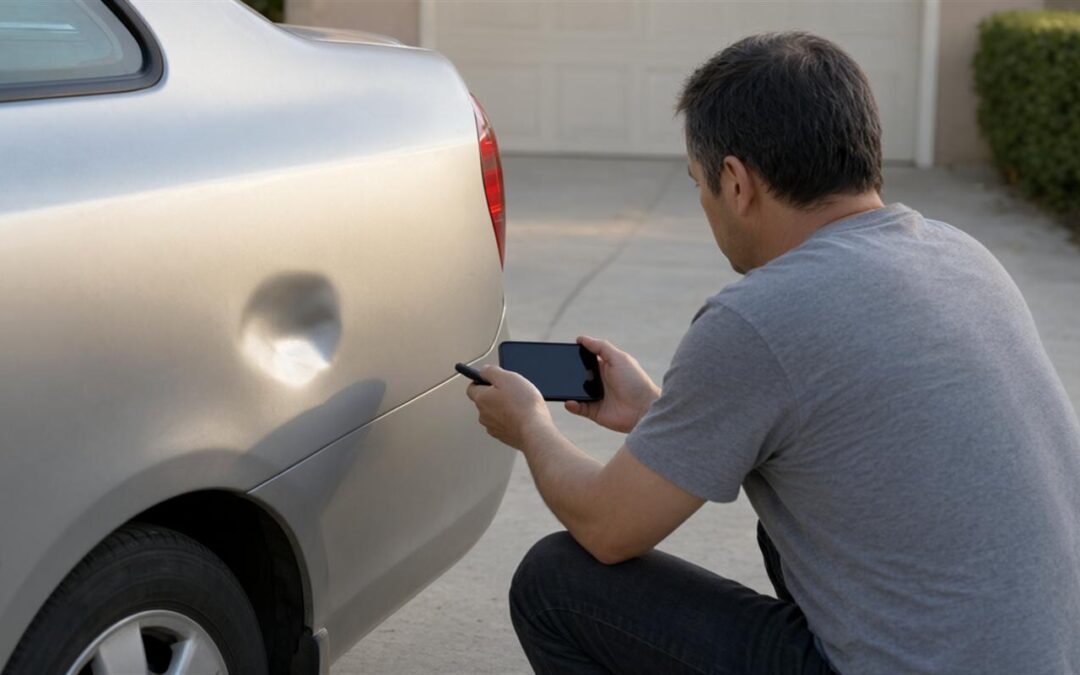
The car damage photos before repair work begins are the raw material for every conversation that follows, whether that conversation is with the shop writing the estimate, with an insurer, or with anyone who has to understand what happened to the vehicle. Most of it can be gathered in a short, safe stop away from traffic and a calmer pass at home, and it is the difference between an estimate built on evidence and one built on a description. What follows is the practical version: the angles worth shooting, the notes worth writing while the details are still sharp, and a way to hand the file over so an estimate appointment starts from something solid.
Why the Record Comes Before the Estimate
An estimate is written from what can be seen and measured on the day the car is inspected. By then the vehicle has usually spent a night in a parking lot, the light is fluorescent, and damage that looked obvious in daylight reads as a scuff. Learning to document car damage after accident day has passed is harder than it looks, because memory starts filling gaps within hours: which panel was already chipped, how the shut lines sat before the impact, whether the trunk closed cleanly the week before.
An early record does two jobs. It gives the shop a starting point for the estimate, and it gives both of you something to compare against when the car is finished. It also matters when hidden damage turns up after panels come off. At that point the earlier images show what was visible at the start, which keeps the conversation about scope grounded in what the car actually looked like.
The Angle Set That Answers the Obvious Questions
One photograph of a dent answers very little. A small set answers the questions an estimator would ask anyway: where on the vehicle the impact landed, how large the damaged area is, how deep it runs, and whether anything around it has moved. Before the camera comes out, the vehicle inspection checklist for panels, lights, tires, and alignment is worth a read, because it sets the order of what to look at.
- Whole vehicle from each corner. Step back far enough to fit the car in the frame. These four shots show where the damage sits relative to panels, lights and wheels, which is the first thing anyone reading the file needs.
- Straight on to the damaged panel. Fill the frame with the panel itself. The outline of a dent, crease or crack is easiest to read from square on.
- A low angle along the panel. Crouch so the light rakes across the surface. Depth and high spots show up here in a way they never do from eye level.
- A close-up with something for scale. A coin, a card or a tape measure resting beside the damage gives the size a number instead of an impression.
- The shut lines at the damaged corner. Photograph the door, hood or trunk gaps from a consistent angle. A gap that has opened or tightened is a detail a photo preserves and a description rarely does.
The set stays small enough to shoot in one walk around the car, and each frame has a job. That is usually enough for a shop to see the shape of the problem before the vehicle is even on the lot.
Scale, Light, and Close-Ups
Scale and light are what make a photograph usable weeks later. Damage photographed with nothing beside it reads as large or small depending on the mood of the viewer. Put something familiar in the frame, keep the phone square to the panel rather than tilted, and shoot the same area twice if it helps.
Daylight is easiest. Overcast conditions flatten shadows and show surface detail well, while hard sun can hide a shallow dent entirely. If the damage sits in shade, turn the car or bring a light source in low from the side and watch the surface change as the light moves across it.
Leave the filters, portrait modes and heavy digital zoom alone. Each one smooths or removes detail the shop may need. Keep the original files rather than the versions a messaging app shrinks, and resist cropping at the time of shooting. A tight close-up of a paint crack at a seam is worth as much as a wide shot of the whole bumper, because it is the part an estimator cannot reconstruct by eye later.
Notes a Shop or an Insurer Will Actually Read
Written notes carry what a camera cannot: sequence and sensation. Note the time, the road and the direction of travel, what was struck, and roughly how hard. Then note what changed afterward, which is often the more useful half. A warning light that came on, a pull to one side, a new noise over bumps, a door that shuts differently, a trunk that no longer lines up: those observations point an inspection toward specific areas.
Write in facts rather than conclusions. “The front left fender sits about a finger’s width out of line with the door” tells an estimator more than “the frame is bent,” and it does not steer the diagnosis before anyone has looked. The same rule applies to the parts of the car that were already worn or damaged. Say so plainly. A shop that knows a scratch predates the collision will not include it in the repair plan, and the note protects the rest of the record from doubt.
Keep the notes separate from the photos, dated, and short. A handful of specific lines beats a page of adjectives.
Records Beyond the Vehicle Itself
The vehicle is only part of the file. If a report was filed, note the agency, the report number and the officer’s name. Collect the other driver’s name, plate, insurer and policy number, along with any witness names and phone numbers. Photographs of the scene help too: the road surface, the signage, the position of the cars before they were moved. Dashcam footage is worth pulling the same day, since many systems overwrite older clips as new ones are recorded.
Recent service and paint paperwork earns its place as well. Paint matching starts from the factory color code and the current condition of the finish, and any panel that has been repainted or repaired before changes what a match looks like in person. Color-matching equipment handles that work more reliably than an eyeballed mix, and knowing which panels have history saves a step. Invoices for paint protection film, tint or wheel work fall into the same folder.
If a claim has been opened, keep the claim number and the adjuster’s name with the rest. It is one number that otherwise lives in an email thread nobody can find at the counter.
Sort the File Before the Appointment
Sorting takes a few minutes and pays for itself at the counter. Put everything in one folder with the date in the name, group the photographs by panel, and label them in plain words: front bumper, left fender, rear quarter. Keep the full-size originals alongside anything resized for sharing, and make sure the whole set opens on the phone you will bring with you.
It helps to know the shape of the appointment before walking in. What to expect during a collision repair estimate covers the walk-around, the visible-damage inspection and the point where a repair plan gets written, so the file can be arranged around the questions that will actually come up.
A shop will usually look at the car first and the file second. Being able to pull up the corner as it looked on the day answers a question in seconds, which is the whole purpose of keeping the record in the first place.
What Photos and Notes Cannot Settle
A photograph shows a dent. It does not show whether the metal behind it has moved, whether a bumper cover is hiding a bent reinforcement bar, or whether a driver-assistance sensor will need attention. Those calls come from an inspection with the car in front of a technician and, where the manufacturer specifies one, a documented procedure to follow.
Documentation also does not rank shops. How to choose a collision repair shop in Phoenix is a separate decision, built on how a shop explains hidden damage, parts options, scanning and timelines. What a good file does is let each shop work from the same facts, so the estimates you compare are actually describing the same car.
Key Takeaways
- Shoot the whole vehicle from four corners, then the damaged panel straight on, at a low angle, and close up with something for scale.
- Keep the originals. Filters, crops and compressed copies all remove the detail a shop needs.
- Write down what happened and what changed afterward in plain factual lines, before memory softens the details.
- Bring the photos, notes and paperwork in one dated folder, and mention any damage that was already there.
Conclusion
A strong record does not make the repair decision, but it gives every conversation a common starting point. Revive Auto Center handles collision damage at 732 E. Dunlap Avenue in Phoenix, with more than 25 years of experience behind the shop, and estimates and consultations are free. Because the shop is not bound by insurance company agreements and works for the vehicle owner, the estimate is built around the car in front of it and the record brought to the counter.
Bring the photos, the notes and the paperwork to the collision repair service at Revive Auto Center, where frame straightening, panel replacement, paint matching and refinishing are handled by the shop’s technicians, or request a free estimate to start the process.