A new squeal, vibration, or change in deceleration deserves attention, but it does not identify which part needs repair. Whether the change happens when releasing the accelerator, pressing the brake pedal, or crossing uneven pavement helps determine what should be checked.
For Phoenix owners seeking Tesla brake service, Revive Auto Center offers inspection and repair as part of its Tesla repair services. Understanding what a proper inspection establishes helps you evaluate recommendations and recognize when driving to the shop is not appropriate.
Key Takeaways
- Regenerative braking reduces friction-brake use, but it does not eliminate the need for inspection and maintenance.
- Squealing, vibration, and pulling are symptoms, not diagnoses.
- A useful inspection checks more than the pad material visible through a wheel.
- Service timing depends on vehicle-specific guidance, operating history, and measured condition.
- Reduced stopping ability, a sinking pedal, or a warning instructing you to stop requires immediate attention.
Does Your Tesla Need a Brake Inspection?
Arrange an inspection for a new or persistent braking symptom. If you notice reduced stopping ability, your first priority should be to stop safely and get assistance rather than schedule a routine visit.
Changes That Warrant an Inspection
These changes warrant attention rather than an assumption that regenerative braking explains them:
- Persistent squealing or a new grinding sound.
- Vibration through the pedal, steering wheel, or vehicle during braking.
- Pulling to one side when the brake pedal is applied.
- A noticeable change in pedal firmness or travel.
- A brake-system warning or recurring warning message.
Noise does not reveal pad thickness, and vibration does not prove that rotors need replacement. Note when the symptom occurs: during the first stop, after repeated braking, or only at certain speeds. Those details can help focus the inspection, but they do not replace it.
When to Stop Driving and Seek Assistance
Stop safely and seek assistance if braking performance is compromised. Do not continue driving to reproduce a serious symptom.
- The vehicle takes substantially more effort or distance to stop.
- The brake pedal sinks unexpectedly or feels markedly different while stopping.
- You suspect brake-fluid leakage.
- The vehicle displays a warning instructing you to stop.
Follow the exact warning instructions and the applicable Tesla owner’s manual. If braking performance may be affected, do not drive the vehicle while testing the issue.
Why Regenerative Braking Does Not Eliminate Brake Service
Tesla vehicles still need brake maintenance because regenerative deceleration does not replace the entire friction-brake system. Reduced use of pads and rotors does not confirm that calipers, brake fluid, hoses, or other components are in good condition.
Regenerative Deceleration and Friction Braking Are Different
Regenerative braking uses the drive system to slow the vehicle while recovering energy. Friction brakes slow it through contact between pads and rotors. A change in accelerator-lift deceleration therefore does not automatically indicate worn pads or a hydraulic brake fault.
Battery temperature, state of charge, vehicle configuration, and software can influence regenerative behavior. The interaction between regenerative braking and friction braking can also vary by model. Use the applicable Tesla owner’s manual to understand the expected behavior, and distinguish it from a change in stopping performance when pressing the brake pedal.
Why Low Pad Wear Does Not Tell the Whole Story
Remaining pad material answers one wear question, not the whole brake-health question. Rotor condition, caliper operation, fluid condition, and uneven wear still matter.
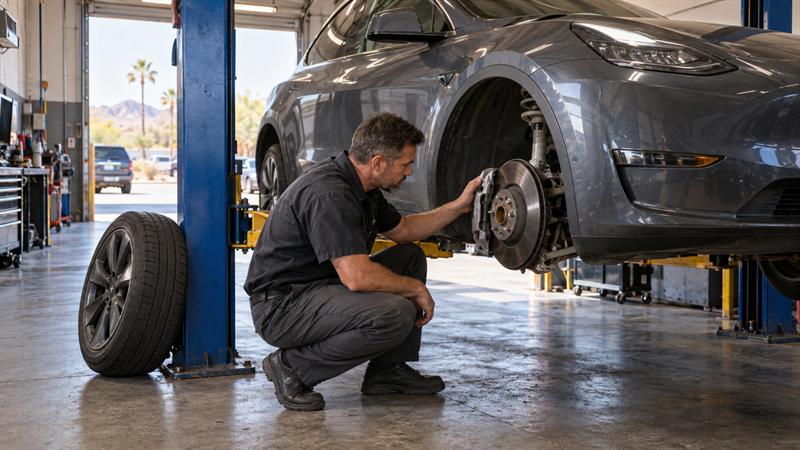
One useful inspection finding is a difference between inner and outer pad wear. Looking through a wheel at the outer pad can miss that difference. If a sticking component is causing uneven wear, replacing pads without correcting the cause can leave the problem unresolved.
What a Tesla Brake Inspection Should Check
A Tesla brake inspection should assess both component condition and the likely cause of any reported symptom. The core checks include:
- Inner and outer pad condition and remaining material.
- Rotor condition and relevant measurements.
- Caliper operation and associated hardware.
- Brake fluid, hoses, and signs of leakage.
- Parking-brake operation and relevant warning messages.
- Tires or suspension when symptoms point beyond the brakes.
Pad Measurements and Wear Patterns
Pad recommendations should follow measurements and wear patterns, not mileage alone. The inspection should account for inner and outer pads and compare findings with the applicable service specifications.
Uneven wear raises a different question from typical, even wear: why is one area wearing faster? A solid recommendation should explain both the remaining material and any condition contributing to the difference. Replacing the most worn pad without investigating the pattern is an incomplete approach.
Rotor Condition, Calipers, and Related Hardware
Rotor and caliper checks help establish whether the braking surfaces and moving components are functioning correctly. Surface appearance is useful evidence, but it is not enough on its own to determine replacement.
- Rotors: Assess surface condition and take measurements where the symptom or observed condition calls for them.
- Calipers: Check operation and signs of sticking or leakage.
- Hardware: Examine relevant mounting and moving components using the vehicle’s service procedures.
A brake that drags continues to apply friction when it should release, adding heat and accelerating wear. If an inspection identifies drag, the repair should address its cause rather than only the worn friction material.
Brake Fluid, Hoses, Parking Brake, and Warning Messages
Fluid and hydraulic checks address concerns that pad measurements cannot answer. They should include signs of leakage, hose condition, and a fluid assessment according to the vehicle’s maintenance guidance.
Parking-brake operation and relevant warnings also belong in the evaluation. Checking fluid condition does not automatically mean fluid replacement is necessary; the findings and applicable guidance should support that recommendation. For an overview of the related services, see the brake services page.
When Tires or Suspension Need a Closer Look
Pulling and vibration sometimes require checks outside the brake assembly. Whether the symptom appears only during pedal braking, also while cruising, or when crossing bumps helps distinguish the possible causes.
Replacing brake parts without investigating that distinction risks leaving the original complaint unresolved. This related guide to Tesla suspension symptoms and inspection covers handling concerns that can overlap with brake complaints.
Persistent brake symptoms need an inspection, not a mileage-based guess. If squealing, vibration, or pulling keeps returning, the issue is more than a one-time sound and should be inspected before parts are selected. If stopping ability has also deteriorated, seek assistance instead of driving to the shop.
When Should Tesla Brakes Be Serviced in Phoenix?
Follow the maintenance guidance for the specific vehicle, then account for symptoms and inspection findings. There is no single pad-replacement mileage that applies to every Tesla.
Follow Guidance for the Specific Model and Year
Scheduled maintenance and condition-based replacement are different decisions. The owner’s manual for the model and year is the starting point for recommended checks and procedures.
- Scheduled checks: Follow the applicable maintenance guidance.
- Fluid assessment: Distinguish checking condition from replacing fluid.
- Cleaning or lubrication: Follow the procedures for cleaning and lubrication that apply to the vehicle.
- Pads and rotors: Base replacement on condition and relevant specifications.
Do not transfer a Model S recommendation automatically to a Model 3, Model X, or Model Y. A scheduled service interval also does not justify waiting when a new braking symptom appears between checks.
Consider Use, Storage, Travel, and Service History
Operating history helps put inspection findings in context. Phoenix ownership alone does not establish a shorter replacement schedule.
- Describe long periods when the vehicle was parked.
- Mention mountain driving or repeated heavy braking.
- Include travel through wet conditions or roads treated with salt.
- Provide records of previous brake work and when symptoms began.
What the brakes have experienced matters more than where the vehicle is registered. For example, exposure to salted roads is relevant maintenance information even if most driving takes place in Phoenix.
How Inspection Findings Shape the Repair Estimate
A useful estimate explains why each service is recommended. “Brake service” alone does not tell you whether the proposed work involves maintenance, replacement parts, or further diagnosis.
Monitoring, Maintenance, or Component Replacement
Different findings justify different responses. A component that is within applicable limits and shows no fault does not require the same work as worn material, leakage, or a sticking caliper.
- Observation: Identify the reported noise, vibration, warning, or braking change.
- Inspection: Establish which checks and measurements address it.
- Finding: Explain what is worn, functioning incorrectly, or still within limits.
- Next step: Connect that evidence to monitoring, maintenance, repair, or additional diagnosis.
Vehicle configuration, affected components, parts, and labor shape the price. Replacing a part without establishing why it failed risks repeat wear or an unresolved symptom. The estimate should connect the work to the finding, not simply list parts.
Questions to Ask Before Authorizing Work
When discussing a brake concern with Revive Auto Center, describe the symptom and request an explanation of the recommended work. A shop’s service overview can provide context, but the final scope should reflect the specific vehicle.
Keep the authorization conversation focused on these questions:
- What was measured, and how does it compare with the applicable limits?
- Which finding explains the symptom?
- What needs attention now, and what can be monitored?
- Does the recommendation address the cause as well as worn parts?
- What work is available for this model and year?
- Are diagnostic charges separate from the repair estimate?
A free estimate or consultation is not automatically a free diagnostic inspection. Confirm the scope and charges before authorizing work so the quoted amount has a clear meaning.
Common Tesla Brake Service Questions
Does Tesla Brake Squealing Always Mean the Pads Need Replacement?
Not necessarily. Squealing alone does not establish pad thickness or identify the cause. An inspection compares inner and outer pad wear, rotor condition, and caliper operation. The timing and persistence of the noise provide useful context, but measured condition, not sound alone, supports a replacement recommendation.
Why Does My Tesla Slow Down Differently When I Lift Off the Accelerator?
Regenerative deceleration varies with battery conditions and the vehicle’s configuration or software. The interaction between regenerative braking and friction braking can also vary by model. A change in slowing after releasing the accelerator is different from reduced stopping ability when pressing the brake pedal; those experiences should not automatically be treated as the same fault.
Can an Independent Shop Inspect and Service Tesla Brakes?
Yes, when the shop has the capability to perform the required work on that model and year. Measuring pad wear and investigating a brake-system warning involve different procedures and potentially different diagnostic requirements. The specific task and vehicle determine the capabilities needed, not independent-shop status alone.
How Much Does Tesla Brake Service Cost in Phoenix?
There is no single price because brake service covers different work. An inspection, maintenance procedure, pad replacement, and caliper repair have different scopes. Vehicle configuration, parts, and labor affect the estimate. A useful written estimate identifies what is included, including whether a diagnostic inspection is part of the quote.
Is a Brake-Light Problem the Same as a Brake-System Warning?
No. A rear brake-lamp problem concerns the lights that signal braking, while an on-screen brake-system warning concerns a message about the braking system. The exact message determines its significance. A warning instructing the driver to stop should not be treated as merely a lamp fault.
Conclusion: Let Inspection Findings Guide the Next Step
Contact Revive Auto Center to arrange an assessment for a non-urgent Tesla brake concern in Phoenix. Remaining pad material does not tell the whole story: uneven wear, sticking components, and overlapping suspension symptoms need the right checks. Ignoring the cause or replacing parts based on noise alone risks continued wear and an unresolved complaint.
Request a free quote. Include the model, year, mileage, exact warning text, and conditions that produce the symptom. Ask about inspection availability and diagnostic charges so the work starts with a clear scope. If stopping ability is compromised, arrange assistance rather than driving to the shop.