Why rust inspection comes before restoration planning
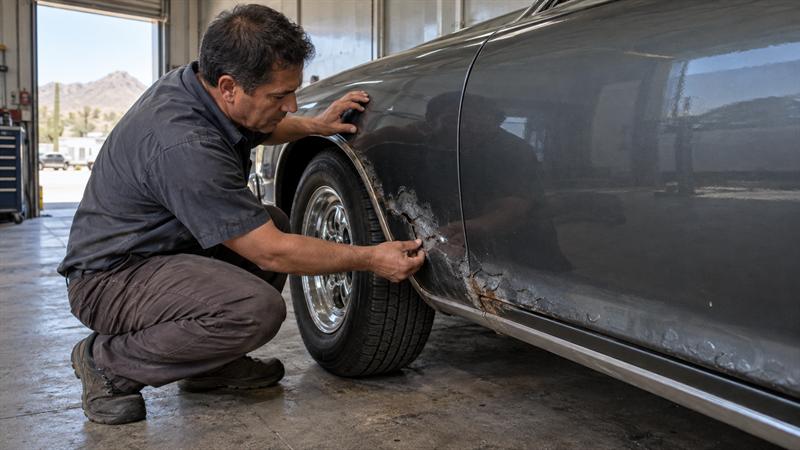
Rust inspection comes first because metal condition helps determine what kind of restoration you are actually dealing with. A car that looks like it needs paint or cleanup can turn into a metal repair project once the lower body, floor pans, or old filler work are checked closely.
Many owners start by thinking about color, trim, or finish quality, when the bigger question is whether the body underneath is solid enough to support that work. At Revive Auto Center, older vehicles can appear solid until corrosion around seams, lower panels, or previous repairs starts showing through.
That is why project planning needs to happen in the right order. If you are mapping out a full restoration, it helps to begin with a realistic inspection plan, much like the approach covered in classic car restoration in Phoenix and how to plan a project with the right service team.
Why cosmetic appearance can hide major metal issues
Cosmetic appearance is one of the easiest ways to misread an older vehicle. Paint can still shine, panels can still line up reasonably well, and trim can distract from what is happening underneath. Bubbling, filler, undercoating, and old repairs are often the places where corrosion is already advancing.
This usually becomes a bigger issue when a vehicle has been repainted without fully correcting the damaged metal. The outside can look presentable for a while, but the rust may continue under the surface until it shows back up around edges, seams, and lower-body sections.
Why older vehicles in Phoenix may still have serious corrosion history
Phoenix owners sometimes assume a classic car is safer from rust simply because it is here now. That assumption misses the bigger picture. Many older vehicles have lived in other climates, sat for long periods, or gone through repairs years ago that trapped moisture or covered corrosion instead of removing it.
This is especially true with project cars that have changed hands several times. The current condition reflects the car’s full history, not just where it is parked today. A dry climate does not automatically mean a rust-free restoration candidate.
The difference between surface rust and structural corrosion
Surface rust is early oxidation on exposed metal or in areas where the finish has broken down. Structural corrosion means the rust has moved deeper into important panels or support areas and is affecting the condition of the metal itself.
That distinction matters because surface rust is usually a localized repair issue, while structural corrosion changes the scope of bodywork and restoration planning. If the vehicle is showing signs of deeper damage, it may need more than cleanup and refinishing. It may need the kind of evaluation that fits a true auto body restoration process.
What surface rust usually looks like
Surface rust usually shows up as light oxidation, discoloration, or early breakdown where paint has failed or bare metal has been exposed. It still matters because it does not stay superficial forever. If a car moves into prep and paint without correcting those areas, the finish work starts from a weak foundation.
What signs suggest deeper damage
- Flaking scale instead of light surface discoloration
- Soft spots in floors, trunks, or lower panels
- Swelling seams or bubbling that keeps returning
- Holes, perforation, or visible patch panels
- Body filler cracking or uneven panel contours
If you are seeing those signs, the issue usually goes beyond appearance. This is where a cleanup job can turn into panel repair, fabrication, or deeper restoration work.
The most important areas to check on a classic car
The most important rust checks are usually not in the most visible areas. They are in the places that trap moisture, hide old repairs, or carry more of the vehicle’s structure. General rust advice tends to stay broad, but owners usually need to know where to look first.
A solid inspection should focus on the sections below before any serious restoration planning begins.
Floor pans and trunk pans
Check for soft spots, patch panels, uneven surfaces, trapped moisture, and signs of earlier repair work. These areas can reveal a lot about how long corrosion has been active and whether the car has already been repaired before.
Underbody rust can change project complexity quickly. Once floors or trunk pans are compromised, the work is no longer cosmetic. It affects how the car is repaired, what has to be removed, and what the next stages of restoration depend on.
Rocker panels and quarter panels
These lower exterior sections are common trouble areas because they collect damage and hide it well. Bubbling or filler here usually means the visible problem is not the full problem.
A common pattern is for owners to focus on the outside skin of the panel while the deeper issue sits along the lower edge, backside, or adjoining seam. That can lead to more metalwork than expected once the area is opened up.
Wheel wells, lower fenders, and door bottoms
Inspect seams, edges, drain areas, and the backside of the panel whenever possible. Rust in these sections often starts where debris, moisture, or earlier coatings sit unnoticed.
This is where corrosion can spread quietly. By the time it becomes visible on the outside, the inner side of the metal is often further along than expected.
Frame rails, body mounts, and structural points
These areas matter more than cosmetic sections because they affect how the body is supported and how the vehicle holds together as a project. Rust here changes the conversation quickly.
If corrosion has reached frame rails, body mounts, or other key structural points, the project may require more extensive planning and repair strategy. At that stage, it makes sense to evaluate the vehicle through a restoration-focused lens rather than treating it like an isolated body blemish. That is where a dedicated auto body restoration approach becomes relevant.
Around glass, trim, and hidden seams
Look for bubbling near window channels, trim lines, seam edges, and tucked-away corners. These are easy to miss during a quick inspection and easy to underestimate when the rest of the car looks presentable.
This can show up on older vehicles that were repainted years ago. The finish can still look serviceable across broad panels, but corrosion sometimes starts pushing through in the narrow areas where moisture and older materials were left behind.
Warning signs that a repaint may not be enough
A repaint is not enough when the finish problem is really a metal problem. If corrosion, filler failure, or unstable panel surfaces are underneath, fresh paint only covers the symptom, and the issue may come back through the new finish.
This is where owners can get pulled in the wrong direction. They want the car to look better first, but the body is pointing to metal work first. The same decision process shows up in other finish-related questions, including the difference between repair and complete refinishing covered in paint repair vs. color change.
Bubbling paint, cracking filler, and uneven panels
- Bubbling paint usually means something below the surface is pushing back through
- Cracking filler can point to older repair areas losing stability
- Uneven panels can signal patchwork, distortion, or past repairs that were never fully corrected
Those signs usually mean refinishing alone will not solve the issue. The metal, repair material, or panel condition may already be at a stage where cosmetic work by itself is unlikely to hold up well.
Why rust often returns if damaged metal is not fully addressed
Rust can return because the underlying problem is still there. If damaged metal is not fully corrected, sealed, and properly prepared, the corrosion may continue below the surface and eventually show back up through the finish.
This can lead to repeat bodywork, repeat paint expense, and frustration that could have been reduced with the right sequence. That is why finish work should follow real correction, not replace it. For readers thinking through paint-stage decisions, Revive Auto Center also offers paint services that fit into the broader repair process once the body is ready.
If you are seeing these signs, the project likely needs more than cosmetic work:
- Rust bubbles around lower panels, seams, or trim edges
- Soft spots in floor pans or trunk pans
- Cracking filler or signs of older patch repairs
- Paint issues that keep coming back in the same area
When those patterns show up together, the next step is often a restoration-focused inspection, not another round of surface refinishing.
How rust changes the scope of a restoration project
Rust changes the scope of a restoration project because it affects labor, sequencing, panel decisions, and finish prep all at once. Once corrosion goes beyond a surface issue, it is no longer one small repair on the list. It starts driving the order and complexity of everything that follows.
This is one of the biggest differences between generic rust content and real project planning. The question is not simply whether rust can be fixed. The real question is how much of the build depends on fixing it first. That broader planning mindset is part of what separates basic repair thinking from full classic car restoration planning.
Repair versus replacement decisions
Some areas can be repaired locally. Others are far enough gone that replacement panels or fabrication work may make more sense. The right choice depends on where the rust is, how much solid metal remains, and what the final standard of the project needs to be.
One common mistake is assuming patching is always the practical answer. In some cases, patching extends labor and leaves surrounding weak metal in place. In other cases, targeted repair is the smarter move. The condition of the panel helps decide that, not a one-size-fits-all rule.
How metalwork affects timeline, paint prep, and budget
Metalwork affects everything that comes after it. It influences panel alignment, surface preparation, repair sequencing, and how well later paint work can be executed. Once corrosion repair expands, the timeline and total scope can expand with it.
What often goes wrong is that owners plan the finish stage first, then discover the body needs more correction than expected. That can lead to restarts, revised expectations, and unfinished plans. Rust affects the project earlier than many people expect.
When to bring a classic car to a restoration-focused body shop
A classic car should go to a restoration-focused body shop when visible rust is spreading, when the condition is unclear, or when the owner is making decisions about paint, bodywork, or larger restoration steps. A DIY inspection is useful for spotting warning signs, but it stops being enough once the vehicle needs scope clarity.
At Revive Auto Center, that kind of inspection matters because the goal is not just to identify rust. The goal is to understand what the rust means for the project before the wrong work gets prioritized.
What a professional inspection can clarify
- Whether visible rust is isolated or part of a larger hidden problem
- Whether body and paint work should wait until metal repair is handled
- How the current condition changes the likely restoration scope
This gives the owner a more accurate starting point. Instead of making decisions from surface appearance, the project is evaluated based on what is actually there.
When a vehicle is still a good restoration candidate
A vehicle can still be a good restoration candidate even with rust, as long as the condition is understood clearly and the project goals match the amount of work involved. Rust does not automatically end a project. What usually stops momentum is underestimating the metalwork until the plan no longer matches the car.
If the vehicle shows recurring rust signs, older patchwork, or corrosion in important support areas, getting a clearer inspection early usually saves time. Revive Auto Center makes that next step simple with a free quote process built around understanding the vehicle’s condition before major work moves forward.
Key Takeaways
- Rust inspection should happen before paint or restoration planning.
- Surface rust and structural corrosion are not the same issue.
- The most important trouble spots are usually lower, hidden, or previously repaired sections.
- Bubbling paint, soft floors, cracked filler, and swelling seams usually point to more than a cosmetic problem.
- Once rust reaches structural or deeper panel areas, it starts changing the full scope of the project.
- A restoration-focused inspection helps clarify what the vehicle really needs before time and money go in the wrong direction.
Conclusion
The real problem with classic car rust is not just the rust you can see. It is the hidden corrosion, unstable old repairs, and weakened structural areas that can change the project after paint plans, budgets, and expectations are already in motion. When that gets missed, the restoration can slow down, cost more, and require major changes halfway through.
That is why the practical next step is to have the vehicle inspected before cosmetic work moves ahead. Revive Auto Center helps Phoenix-area owners look at rust the right way: as a body and restoration planning issue first, not just a finish issue. If you are seeing bubbles, soft spots, patchwork, or rust around seams and lower panels, bring the project to Revive Auto Center and start with a clear assessment of what the car may need.
FAQ
Can a classic car with rust still be worth restoring?
Yes, a classic car with rust can still be worth restoring if the rust is understood clearly before the project starts. The deciding factors are where the corrosion is, how deep it goes, and whether it affects cosmetic panels or more important structural sections.
For example, light surface rust on accessible outer metal is a very different situation than soft floor pans, rusted body mounts, or lower panels filled and repaired multiple times. The first affects cleanup and prep. The second changes labor, metalwork, and restoration scope. What matters most is not whether rust exists, but what kind of rust it is and what it leads to once the car is opened up.
What parts of a classic car rust first?
The first areas to rust are usually the places that trap moisture, debris, or older repair materials. That includes floor pans, trunk pans, rocker panels, quarter panels, wheel wells, lower fenders, door bottoms, and seams around glass or trim.
These spots matter because they hide damage well. A quarter panel can still look decent on the outside while corrosion is working from the backside or lower seam. That is why the first visible rust spot is rarely the only area worth checking.
Is bubbling paint always a sign of rust underneath?
No, bubbling paint is not always rust, but it is a strong warning sign that the surface below is not stable. Bubbling usually points to moisture, corrosion, failing filler, or earlier paint work that is losing adhesion.
The location matters. Bubbling around lower panels, seam lines, or trim edges is more concerning than a random isolated defect in the middle of a broad panel because those edge areas are where hidden corrosion tends to start and spread. The important takeaway is that bubbling is not just a finish problem until the underlying condition is checked.
Should rust be repaired before repainting a classic car?
Yes, rust should be addressed before repainting because repainting does not fix damaged metal underneath. If corrosion is still active below the surface, it can come back through the new finish and force the work to be redone.
This is especially true when the car already shows bubbles, cracked filler, or repeat defects in the same area. In that situation, the question is no longer whether the car needs paint. The question is whether the panel is ready for paint at all. Repair comes first because finish quality depends on what the metal is doing underneath.
How do you tell if rust is structural on an older vehicle?
Rust becomes structural when it affects important support sections such as frame rails, body mounts, key floor areas, or other load-bearing parts of the body. Signs include soft metal, holes, flaking scale, swelling seams, or sections that no longer feel solid.
The distinction is not about color or appearance alone. A small rust area in a critical mounting or support location matters more than a larger cosmetic blemish on an outer skin panel. Location and depth are what change the decision.
What does a restoration-focused rust inspection help identify?
A restoration-focused rust inspection helps identify whether the visible damage is isolated, whether corrosion is likely hiding behind the surface, and how the metal condition affects the full project plan. It is meant to answer scope questions, not just point out flaws.
For example, it can show whether body and paint work should wait until panel repair is handled first, or whether a suspicious area is likely tied to older patchwork and recurring corrosion. That clarity matters because it keeps the next step tied to the real condition of the vehicle instead of the way the outside happens to look right now.