A classic vehicle can look like a straightforward project until a closer inspection reveals old repairs, corrosion, missing trim, aging wiring, or modifications from different points in its history. At Revive Auto Center, restoration conversations may involve vehicles that have already received some work but still need a clear plan for how body, paint, mechanical, electrical, and interior decisions fit together.
That is why a classic car restoration project in Phoenix should start with priorities, not just a wish list. The first step is defining what the owner wants to preserve, repair, update, or improve before final surfaces and finishing details are addressed.
A Classic Car Restoration Starts With the Right Questions
“Restore it” is a goal, not a complete project scope. A useful restoration plan accounts for the vehicle’s current condition, work already completed, available parts, owner priorities, and how the car will be used after the project.
Problems can begin when planning is skipped. A weekend driver needs a different approach than a family keepsake, a period-correct show vehicle, or a performance-focused custom build. Choosing a direction too late can mean revisiting work after time and money have already gone into the vehicle.
Questions to answer before planning restoration work:
- Is the goal preservation, period-correct restoration, regular driving, or modernization?
- What repairs or modifications have already been made?
- Which concerns affect function, safety-related systems, appearance, or long-term condition?
- Are there parts already owned, missing components, or aftermarket additions to consider?
- Which priorities need to be addressed first?
Define How You Want to Use the Vehicle
The intended use should guide the restoration plan. A vehicle built for shows may place more emphasis on period-correct materials and appearance, while a weekend cruiser may need attention to brakes, cooling, wiring, drivability, and comfort before cosmetic upgrades become the focus.
A common mistake is treating every classic as though it needs the same level of originality or the same upgrades. The more useful question is what the finished vehicle needs to do for its owner. That answer shapes decisions about parts, finish level, performance work, and restoration sequence.
Understand the Vehicle’s Starting Condition
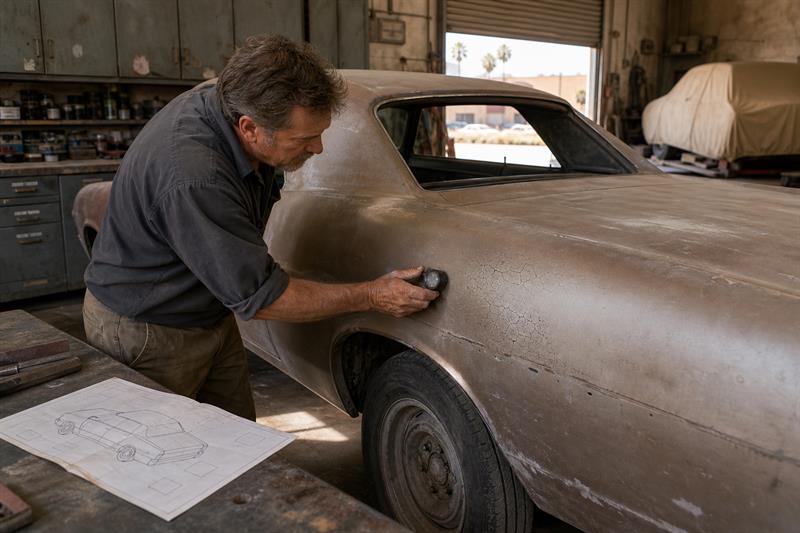
Older vehicles carry history, and that history affects the work ahead. Storage conditions, prior body repairs, replacement panels, aftermarket wiring, engine swaps, cracked paint, missing trim, and incomplete projects can all change the restoration scope.
If a vehicle has visible corrosion, uneven bodywork, electrical issues, or unknown prior repairs, those concerns should be reviewed before the project moves into final paint or interior installation. Ignoring foundational issues can turn a cosmetic project into a more involved correction later.
What Does Classic Car Restoration Usually Include?
Classic car restoration may include body repair, rust correction, paint refinishing, mechanical repair, electrical work, interior restoration, trim work, and wheel refurbishment. Not every project needs every category, but each area should be considered in relation to the rest of the vehicle.
The right restoration scope matches the car’s condition and the owner’s chosen direction. A vehicle with a solid body and worn interior needs a different plan than one with aging wiring, previous collision repairs, and paint failure.
Body, Rust, and Overall Condition
Body condition should be understood before final paint decisions are made. Rust-prone areas, prior repairs, panel fitment, exterior damage, and visible corrosion can affect how the vehicle is prepared and what needs attention before refinishing begins.
On older vehicles, a fresh finish can make panel alignment, old repair lines, or corrosion more noticeable when those issues were not addressed first. Reviewing auto body restoration services can help show why exterior restoration involves more than repainting a vehicle.
Paint and Exterior Refinishing
Paint is one of the most visible parts of a classic restoration, but it should not be treated as an isolated step. Body preparation, trim removal, accessory plans, and future work that affects the exterior should be considered before final refinishing.
If paint is completed before related work has been planned, later repairs can require additional disassembly or refinishing. Revive Auto Center’s paint services and exterior refinishing can support a defined project direction.
Engine, Drivetrain, Brakes, and Suspension
Mechanical restoration can involve the engine, cooling system, drivetrain, brakes, steering, and suspension. These systems help determine whether a classic vehicle is being preserved for display, prepared for occasional driving, or updated for a more modern driving experience.
A car that looks finished but has braking, cooling, or starting concerns may not be ready for the use its owner expects. Mechanical priorities should be identified early, especially when the vehicle has been stored for a long period or has an unclear service history.
Electrical Systems and Classic-Car Wiring
Classic-car wiring deserves early attention when a vehicle has aged, been modified, or repaired by multiple owners. Wiring, gauges, lighting, charging systems, starting systems, and added accessories can all affect the restoration plan.
An interior project becomes more complicated when wiring or dash-related work was not considered first. Electrical work should be planned before dash components, trim, carpet, or upholstery are fully reinstalled when those systems overlap.
Interior, Upholstery, Trim, and Wheels
Interior restoration can include seats, upholstery, carpet, headliners, dash pieces, trim, and related materials. Wheels also influence the finished appearance of the vehicle and should fit the owner’s goals for originality, style, and use.
Interior work is not simply a final cosmetic add-on. It needs to align with wiring, dash condition, accessory plans, and the wider restoration sequence. For projects involving seats, trim, and cabin materials, auto upholstery services for classic interiors can be part of the overall restoration scope.
Choose the Restoration Path That Fits the Vehicle and Your Goals
There is no single definition of a successful classic car restoration. The practical choice depends on vehicle condition, intended use, existing modifications, and the importance of originality to the owner.
For many owners, the right path addresses foundational needs first and keeps the finished vehicle aligned with how it will actually be used. A full restoration is not automatically the best or most necessary choice.
Targeted Restoration
Targeted restoration focuses on specific areas that need attention, such as worn upholstery, paint deterioration, braking concerns, electrical problems, body damage, or missing trim. This approach can make sense when the vehicle is fundamentally sound and the owner has clear priorities.
Targeted work is not necessarily a lesser form of restoration. It can be a practical way to preserve a vehicle’s character while correcting the issues that interfere with appearance, function, or enjoyment.
Phased Restoration
A phased restoration organizes work in an order that helps limit unnecessary disruption. A common sequence begins with a condition review and mechanical priorities, moves into body and paint preparation, and then finishes with interior, trim, wheels, and final details.
The actual order depends on the vehicle. The important point is that completed cosmetic work should not be put at risk by later electrical repairs, body correction, mechanical access, or accessory installation. A defined project plan can help reduce repeated work.
Period-Correct Restoration and Preservation
Period-correct restoration focuses on returning a vehicle toward an appearance or specification associated with its era. Preservation takes a different approach by retaining original materials, finishes, and components where they remain suitable for the owner’s goals.
The distinction matters because replacing original components, refinishing every surface, or adding modern equipment changes the direction of the project. Owners who value historical character should identify that preference before selecting parts, paint, interior materials, or upgrades.
Restomod or Performance-Focused Upgrades
A restomod keeps a classic vehicle’s vintage character while adding selected modernized systems, features, or performance upgrades. The scope may include engine work, braking, suspension, electrical updates, or convenience accessories.
This route is most practical when modern usability is a clear priority from the beginning. Adding upgrades late in the process can disrupt the plan, especially when changes affect wiring, interior trim, wheel selection, or exterior finishing.
What a Thorough Restoration Consultation Should Cover
A thorough restoration consultation should establish the vehicle’s starting condition and the owner’s end goal before major work begins. It should move beyond a simple request for a price and identify the decisions that define the real project scope.
What to cover during a classic car restoration consultation:
- Vehicle history, storage conditions, known issues, and prior repairs
- Previous modifications, replacement components, and incomplete work
- Intended use, originality preferences, appearance goals, and practical priorities
- Visible body, paint, mechanical, electrical, interior, and trim concerns
- Parts already owned, missing parts, and material considerations
- The likely order of work across the vehicle’s systems
- How newly identified concerns will be discussed as the project develops
Older vehicles do not always reveal every concern during a quick visual review. Once components are removed or earlier repairs are examined more closely, additional work may become visible. A clear consultation process prepares the owner for that possibility instead of treating it as a surprise.
Why Restoration Projects Need a Coordinated Service Team
Classic restoration projects benefit from coordinated planning because bodywork, paint, mechanical repair, electrical work, interior installation, wheels, performance upgrades, and accessories can affect one another. Treating each item as a separate job without considering the sequence can create unnecessary backtracking.
For example, body condition affects paint preparation. Electrical changes can affect the dash and interior. Wheel and suspension decisions influence appearance and drivability. Accessory plans should be considered before final finishing work begins.
If your classic has any of these signs, a restoration plan may be helpful before cosmetic work moves forward:
- The vehicle has old body repairs, cracking paint, corrosion, or uneven panel fitment.
- Wiring, gauges, lights, charging, or starting systems are inconsistent.
- The car has been stored, partially restored, modified, or left unfinished.
- You want paint, upholstery, performance work, or accessories but have not established the order of work.
These signs can point to connected project needs rather than separate cosmetic tasks. The next step is to define the scope and sequence before finished work is installed or refinished.
Questions to Ask a Classic Car Restoration Shop in Phoenix
A restoration shop should be able to explain its planning process in clear terms. Broad claims about complete restoration matter less than how the team reviews the vehicle, documents priorities, and communicates when the project reveals additional needs.
- How will the vehicle’s starting condition and project scope be documented? This helps show whether the shop begins with a defined process or a broad service promise.
- What work should be prioritized first, and why? The answer should reflect the relationship between mechanical, electrical, body, paint, and interior work.
- Which services can be handled or coordinated? Restoration projects frequently involve several specialties, and the owner should understand how those needs will be managed.
- How are changes discovered during the project communicated? This matters because older repairs, corrosion, missing parts, and prior modifications can alter the scope.
- How does the shop approach original parts, replacements, and upgrades? This helps separate a preservation-focused project from a period-correct restoration or restomod build.
- Can the project be planned in phases? A phased approach can be useful when it follows the appropriate order of work.
Preparing for a Classic Car Restoration Estimate
A restoration estimate is more useful when the vehicle’s history and the owner’s goals are clear. Bringing the right information turns a general inquiry into a more focused discussion about what the project needs first.
What to bring to a classic car restoration estimate:
- Service records, prior restoration receipts, and repair invoices
- Photos showing the vehicle before storage, damage, or previous work
- A list of parts already owned, missing components, and known modifications
- Must-address mechanical or body concerns
- Preferred upgrades and cosmetic goals
- A clear description of how the vehicle will be used after restoration
Costs and project timing are shaped by vehicle condition, selected scope, parts, materials, and the restoration path chosen. Clear starting information makes it easier to identify priorities and avoid treating a multi-system restoration as a single-line repair request.
Classic Car Restoration Services at Revive Auto Center
Revive Auto Center approaches classic restoration as a coordinated vehicle project, not just a paint job or a collection of separate repairs. Depending on the vehicle and the owner’s goals, the work may involve restoration planning alongside auto repair, collision repair, engine repair, electrical repair, performance work, body restoration, paint, upholstery, wheels, or custom accessories.
For restoration projects, the conversation can remain centered on the vehicle’s condition, the owner’s priorities, and the order of work needed to move the project forward.
Key Takeaways
- A classic car restoration should start with the vehicle’s condition and the owner’s intended use.
- Full restoration is only one option. Targeted, phased, preservation-focused, and restomod paths serve different goals.
- Body, paint, mechanical, electrical, interior, wheel, and accessory decisions are often connected.
- Starting cosmetic work before reviewing foundational issues can lead to repeated work later.
- A clear consultation and project sequence give the restoration a stronger direction from the start.
Conclusion: Start With a Clear Restoration Plan
The real challenge in classic car restoration is not deciding that a vehicle deserves attention. It is deciding what needs to happen first and making sure bodywork, paint, wiring, mechanical systems, interior details, and upgrades do not work against one another. When those decisions are handled out of order, the project can become more complicated and finished work may need to be revisited.
Revive Auto Center provides free consultations and free estimates for Phoenix owners who need a clear starting point for a classic vehicle project. Bringing the vehicle’s history, current concerns, and goals to that discussion helps create a restoration plan around the work that needs attention first.
Frequently Asked Questions
What is included in a classic car restoration?
Classic car restoration may include body and rust repair, paint refinishing, mechanical repair, engine and drivetrain work, brakes and suspension, electrical repair, interior upholstery, trim, and wheel refurbishment. The scope is not a fixed package because each vehicle begins in a different condition.
For example, a car with sound body panels but braking concerns and aging wiring needs a different first phase than a vehicle with corrosion, previous body repairs, and failing paint. The restoration plan should reflect the condition of the car and how it will be used.
Should I restore my classic car all at once or in phases?
A phased restoration can be practical when the owner has clear priorities and the project can be sequenced without disrupting completed work. The first phase commonly addresses a condition review and mechanical priorities, followed by body and paint preparation, then interior and finishing details.
The important issue is order. Electrical or accessory work that affects the dash and interior should be considered before upholstery and trim are finalized. Body condition should also be understood before final paint is applied.
What should I bring to a classic car restoration consultation?
Bring service records, restoration receipts, prior repair invoices, photos, a parts inventory, and information about modifications or incomplete work. These details help establish what has been changed, what may be missing, and what should be reviewed first.
A short list of must-address concerns, preferred upgrades, and cosmetic goals is equally useful. It gives the project a practical direction and separates necessary work from optional changes.
How do I choose a classic car restoration shop in Phoenix?
Choose a shop based on how clearly it explains its review and planning process. The discussion should cover vehicle condition, intended use, body and paint needs, mechanical and electrical concerns, original versus upgraded components, and how scope changes are communicated.
A common misunderstanding is that a restoration quote is only about the finished appearance. The more important issue is whether the shop can explain the order of work and identify the systems that need to be considered together.
What is the difference between a classic car restoration and a restomod?
Classic car restoration generally focuses on repairing, preserving, or returning a vehicle toward an original or period-appropriate condition. A restomod retains classic styling while adding selected modernized systems, features, or performance upgrades.
The distinction changes the project plan. A period-correct approach may prioritize original-style components and materials, while a restomod may involve updated wiring, braking, suspension, engine performance, or convenience accessories. The deciding factor is whether originality or modern usability is the owner’s main priority.
Can an older classic car be restored if it has previous repairs or modifications?
Older classics frequently have replacement parts, aftermarket wiring, previous bodywork, or incomplete restoration work. Those conditions do not automatically prevent a restoration project, but they make the initial review more important.
The key is determining how prior work fits the intended direction. A modification that makes sense for a restomod may conflict with a period-correct goal, while old body repairs or wiring changes may need attention before final paint, interior, or accessory work is completed.