Quick Answer: Minor-looking collision damage does not always reveal whether the issue is cosmetic or functional. Once immediate scene needs are addressed, inspect panels, closures, lights, visible tire and wheel condition, loose parts, leaks, and warnings from a safe, stationary position. Damaged tires, an insecure hood, or steering and braking concerns should be evaluated before driving further.
Knowing what to check after a car accident starts with separating appearance from function. A scuffed bumper and a shifted bumper raise different repair questions, even when both look like small problems.
Revive Auto Center offers collision, mechanical, and electrical repair services for Phoenix-area drivers facing that uncertainty. Use this checklist to organize what you can safely observe before discussing repairs with a shop.
Key Takeaways
- Check function as well as appearance: Changed gaps, loose lights, and tire contact deserve attention beyond the visible dent.
- Keep checks stationary: Do not test-drive to discover symptoms or inspect from an exposed roadside location.
- Recognize inspection limits: A lack of visible damage or dashboard warnings does not rule out a problem.
- Document before choosing repairs: Photos and newly noticed symptoms help guide the discussion toward cosmetic work, collision inspection, or mechanical and electrical evaluation.
Before You Check the Vehicle: Know When to Get Help First
Start a walk-around only after immediate safety needs have been addressed and the vehicle is away from traffic. First determine whether you need emergency assistance or help arranging inspection and transport.
Warning Signs That Warrant Professional Help Before Driving Further
Stop driving and request help when any of the following are present:
- Smoke, fuel odor, or active fluid leakage.
- A visibly cut, bulging, or deflated tire.
- Loose components that could detach, bodywork touching a tire, or a hood that will not latch securely.
- New steering or braking problems noticed after the impact.
For an active emergency, move away from the hazard when safe and call emergency services. Otherwise, arrange professional assessment or towing. Fluid color alone is not a reliable way to identify a leak, and the owner’s manual can help explain specific warnings.
Keep the Check Visual, Stationary, and Away From Traffic
Look only at areas you can observe safely without moving or dismantling damaged parts. Do not crawl underneath, touch unknown fluids, reach behind wheels, force closures, or handle exposed wiring.
Leave damaged high-voltage components on electric or hybrid vehicles to qualified responders or technicians. If the location is unsafe, skip the checklist and get help arranging safe recovery or towing.
What to Check After a Car Accident: A Quick Walk-Around
Check panel fit, lighting, tires, wheels, loose parts, visible leakage, and any dashboard warnings already observed. Record what changed rather than trying to determine the repair yourself.
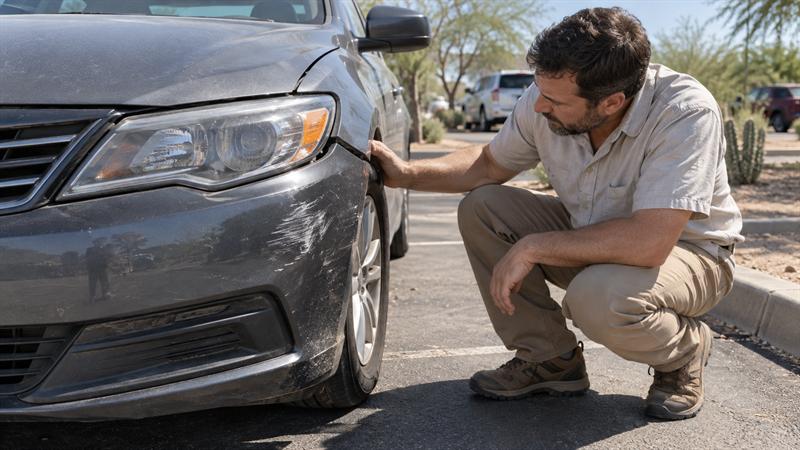
- Panels and bumpers: Look for displacement, new gaps, or loose edges. Changed fit calls for more than a paint-only assessment.
- Hood, doors, and trunk: Note uneven fit or closure problems already noticed. Do not force them open or shut.
- Lights: Look for cracked lenses, shifted housings, and loose assemblies. Check operation only when safe.
- Tires and wheels: Look for visible damage, low inflation, and bodywork touching a tire. A damaged or visibly deflated tire, deformed wheel, or tire contact is a reason to stop driving.
- Loose parts: Note hanging trim or damaged bumper attachments without pulling on them.
- Leakage: Observe from a distance. Suspected significant fluid loss needs assessment before further use.
- Warnings: Record any dashboard messages you have already seen. Do not start the vehicle only to complete this list.
A walk-around that reveals no obvious problems is useful information, not a safety clearance.
Panels, Bumpers, and Closures: Look Beyond the Dent
Check whether the impact changed panel fit, secure attachment, or clearance around a tire. Those observations help distinguish a finish repair from damage that affects how parts fit and function.
Changed Gaps, Loose Parts, and Tire Contact
A shifted bumper cover raises a different question from a surface scuff: are its attachments damaged? The paint condition does not answer that question.
- New uneven gaps: Record the location and any known pre-existing differences. Gaps alone do not prove collision damage.
- Loose edges or trim: Movement and vibration can worsen looseness. Attachment points need inspection before cosmetic finishing.
- Reduced tire clearance: Bodywork rubbing against a rotating tire can damage it. Stop vehicle use rather than waiting for the rubbing to worsen.
A hood that no longer latches securely is more than a panel-fit concern. Do not drive with an insecure hood.
Paint Damage and Dents May Need Different Repair Approaches
Surface damage and panel damage do not automatically need the same repair. A scuff on a securely fitted panel raises different questions from cracked paint on a displaced panel.
Paintless dent repair options depend on paint condition, dent location, access, metal condition, and associated damage. Intact paint is one useful factor, not proof that PDR will work.
When the finish needs attention, paint repair services belong after underlying fit and damage have been assessed. For more on choosing between these approaches, see the comparison of paintless dent repair versus traditional body repair.
Lights: Check Operation, Housing, and Mounting
A light needs to work, remain secure, and direct light appropriately. Checking illumination alone leaves mounting and aim unanswered.
Look for Cracks, Loose Assemblies, and Nonworking Signals
Inspect visible lenses and housings without touching damaged wiring or removing parts. Note:
- Cracked headlight or taillight lenses.
- Shifted housings or loose assemblies.
- Exposed wiring near the impact.
- Nonworking headlights, brake lights, or turn signals during safe stationary checks.
A broken lens can let moisture into the assembly, while a loose housing remains vulnerable to movement. Record both physical damage and operation problems so the evaluation addresses the assembly, not just the bulb.
A Working Headlight May Still Need Inspection
Illumination confirms that a light operates, not that its mounting or aim is correct. A displaced housing can still light up while directing the beam differently.
Replacing a bulb does not correct damaged mounting or a shifted housing. Changed housing position calls for inspection of mounting and aim using the applicable vehicle procedures.
Wheels, Tires, and Alignment: Recognize Possible Mechanical Damage
New handling symptoms or signs of tire and wheel damage need evaluation before assuming an alignment adjustment will solve them. Alignment concerns and damaged components can occur together.
Check Visible Tire and Wheel Condition While Parked
Look at exposed tire and wheel surfaces for cuts, bulges, a noticeably low tire, wheel damage, or bodywork contact. Do not reach behind the wheel or move the vehicle to improve the view.
A cut, bulging, or deflated tire is a stop-use concern because continued driving puts stress on it. An undamaged-looking outer surface does not establish the condition of areas you cannot see.
Report Handling Changes Already Noticed: Do Not Test-Drive
Report pulling, vibration, rubbing, an off-center steering wheel, or changed steering and braking behavior that you already noticed. Do not drive again to reproduce them.
- Pulling or an off-center wheel: Alignment, tires, steering, and suspension need consideration before choosing a repair.
- New vibration: Wheel, tire, or related mechanical condition needs evaluation rather than a cosmetic wheel fix.
- Rubbing: Clearance must be checked. Continued contact can wear or damage the tire.
The mistake is treating a symptom as a diagnosis. Inspection and measurements help establish whether an adjustment is sufficient or damaged components need attention first.
If any of these signs remain unexplained, consider holding paint-only work until the area is evaluated:
- A bumper or panel has shifted toward a tire.
- A light housing is loose despite still working.
- The steering wheel sits differently or the vehicle pulled after the impact.
These signs point first to collision or mechanical evaluation, then to cosmetic repairs. Contact Revive Auto Center to discuss the damage and appropriate evaluation. If you are unsure whether it is safe to drive, arrange transport rather than driving in.
What a Visual Checklist Cannot Rule Out
An exterior check cannot assess everything behind the damaged area. It identifies observations to share, not every component that needs attention.
Damage Behind Panels and Bumper Covers
A bumper cover does not reveal the full condition of its mounting, reinforcement, nearby wiring, or mechanical components. A small exterior mark can accompany concealed damage.
A preliminary estimate can change when further inspection reveals additional damage. Choosing paint work from exterior photographs alone leaves the condition underneath unanswered.
Sensors and Diagnostics Depend on the Vehicle and Damage
Scanning and calibration decisions depend on the vehicle, impact area, and repair procedures. Parking sensors and driver-assistance components can sit in areas affected by a collision.
The absence of a dashboard warning does not show that every affected component is correctly positioned or functioning. Service information and applicable repair procedures can guide the evaluation and any calibration needs; the size of the visible dent is not enough to make that decision.
Document the Damage and Choose the Next Step
Document where the impact occurred and what changed afterward. Clear photos and symptom notes support the initial shop discussion without substituting for inspection.
What to Photograph and Tell the Shop
- Wide views: Show the affected side and where damage sits on the vehicle.
- Impact close-ups: Capture dents, paint damage, and visible loose parts.
- Fit changes: Photograph altered gaps or displaced assemblies without forcing anything.
- Wheel and light damage: Record what is visible from a safe position.
- New symptoms: Write down warnings and handling changes already noticed, along with relevant pre-existing conditions.
Photos help explain the concern, but they cannot show every damaged component or establish a final repair scope.
Collision Repair, Mechanical Evaluation, PDR, or Paint Work?
Choose the initial evaluation by what changed, not simply by the most noticeable blemish. Where damage affects fit or function, evaluation comes before selecting a cosmetic method.
- Displaced panels or damaged assemblies: Start with an assessment through collision repair services.
- Handling, wheel, or tire concerns: Mechanical inspection takes priority over assuming an alignment-only repair.
- Light damage or operation faults: Collision and electrical evaluation can overlap.
- An isolated dent or finish concern: PDR or paint work becomes the relevant discussion once associated damage has been assessed.
Revive Auto Center’s collision, mechanical, and electrical services can help when concerns cross these categories. The repair decision still starts with establishing what is damaged, not choosing a service from appearance alone.
Use the Checklist to Prepare for an Estimate
Bring your photos and observations to the estimate discussion, and ask what is included in the estimate or consultation.
For the next stage, see What to Expect During a Collision Repair Estimate. Your checklist provides starting information; it is not a completed inspection.
Frequently Asked Questions About Minor Collision Inspections
Is My Car Safe to Drive After a Minor Accident?
Minor-looking damage alone cannot establish whether a car is safe to drive. A damaged tire, insecure hood, significant fluid leak, or changed steering or braking can matter more than the size of a dent. If those concerns are present, stop driving it and arrange assessment or towing rather than test-driving it.
Can a Minor Bumper Hit Cause Hidden Damage?
Yes, a minor bumper hit can damage components behind the visible cover, although not every impact does. Mounting points, reinforcement, wiring, or sensors may be affected without obvious exterior changes. The bumper cover’s appearance does not reveal the condition of every component behind it.
Does Pulling After an Accident Mean the Car Only Needs an Alignment?
No. Pulling is a symptom, not a diagnosis. Tire, wheel, steering, or suspension damage may contribute, so an alignment adjustment alone may not address the cause. Inspection and measurements help determine whether alignment is the issue or damaged components need attention first.
Can Paintless Dent Repair Fix a Dent From a Collision?
Sometimes. Suitability depends on paint condition, dent location, access, metal condition, and associated damage. Intact paint does not automatically make a dent suitable for PDR. A dent accompanied by panel displacement or mounting damage raises different repair questions from an isolated dent.
Do I Need an Inspection if There Are No Warning Lights?
An inspection may still be needed because dashboard warnings do not monitor every type of collision damage. A loose headlight housing, changed panel gap, or damaged tire may be visible without triggering a warning. No warning light does not mean the damage has been properly assessed.
Conclusion: Use the Checklist to Inform an Inspection, Not Replace One
Contact Revive Auto Center for a free estimate or consultation when collision damage leaves panel fit, lighting, or handling concerns unresolved. Repairing the visible blemish without addressing loose mounting, tire contact, or mechanical damage leaves the underlying problem in place.
Gather photos you can take safely, write down any symptoms, and request an evaluation before choosing cosmetic work. Review what to expect during a collision repair estimate to prepare. If warning signs or driving uncertainty remain, arrange towing instead of driving in to obtain an estimate.